31 Local SEO Ranking Factors: A Complete DIY Guide
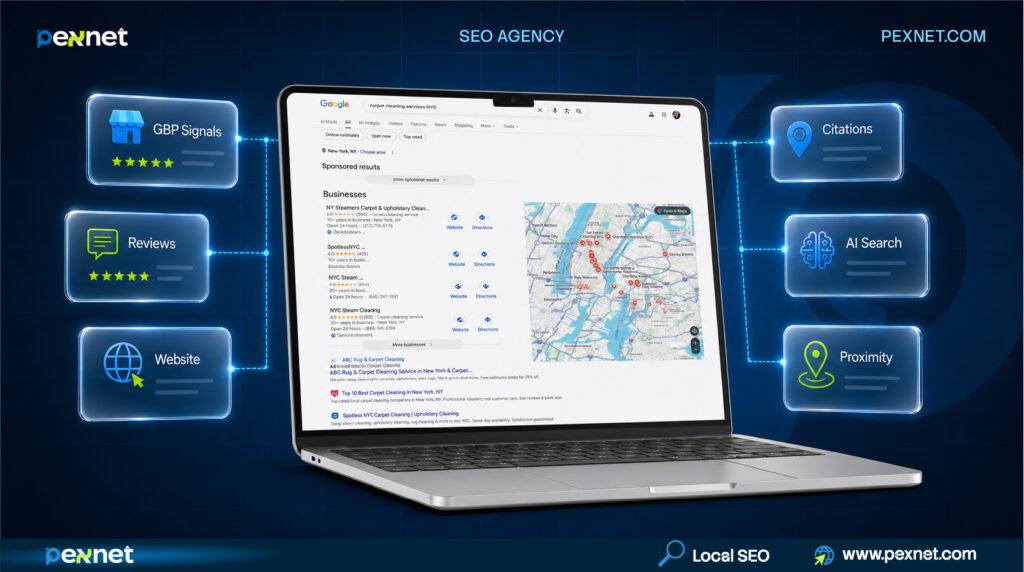
We all know SEO never really stays the same, and local SEO is no different.
In fact, a lot has changed in the past few years. Now, businesses are fighting to take their place on Google’s AI mode and AI overview. At the same time, more people are getting the information they need without even clicking a website.
That means your online presence should be robust to keep up with these changes. And the first part of going about that is knowing how to use the different local SEO ranking factors to your benefit.
We created this guide to cover every ranking factor in 2026 – from foundational signals to advanced GBP dynamics, behavioral data, entity authority, and AI search visibility. Each factor includes what it is, why Google cares about it, and actions that deliver real results.
How Google Ranks Local Businesses
Google officially uses three pillars to rank local businesses:
1. Relevance – Does this business match the searcher’s intent?
This is when Google tries to understand what your business is all about.
If your profile is complete, Google will be able to easily match you to specific searches like “Invisalign dentist,” “emergency dentist,” or “dental implants near me.”
Your categories, services, business description, website pages, and your posts all help Google understand your business. So, if you don’t clearly mention a service, Google is much less likely to show you for it.
2. Proximity – How close is the business to the person searching?
This is the only factor you can’t directly control, but you can help Google determine how well you show up in local searches.
Google uses the searcher’s location and compares it to your verified address. This is why someone standing two blocks away from your clinic might see a completely different map pack than someone Googling from across the town.
3. Prominence – Is this business trusted, active, and well-known?
This is Google’s way of measuring your reputation and credibility. Things like reviews, ratings, links to your website, mentions on different directories, and profile activities are all fed into this signal.
You should have lots of recent reviews, NAP consistency, mentions, and regular updates so Google finds you reliable and well-known.
According to Whitespark’s 2026 Local Search Ranking Factors report, GBP signals alone account for 32% of Local Pack ranking weight, followed by on-page signals (19%), review signals (16%), and link signals (15%).
31 Local SEO Ranking Factors

Section 1: Google Business Profile Signals (32% of Pack Weight)
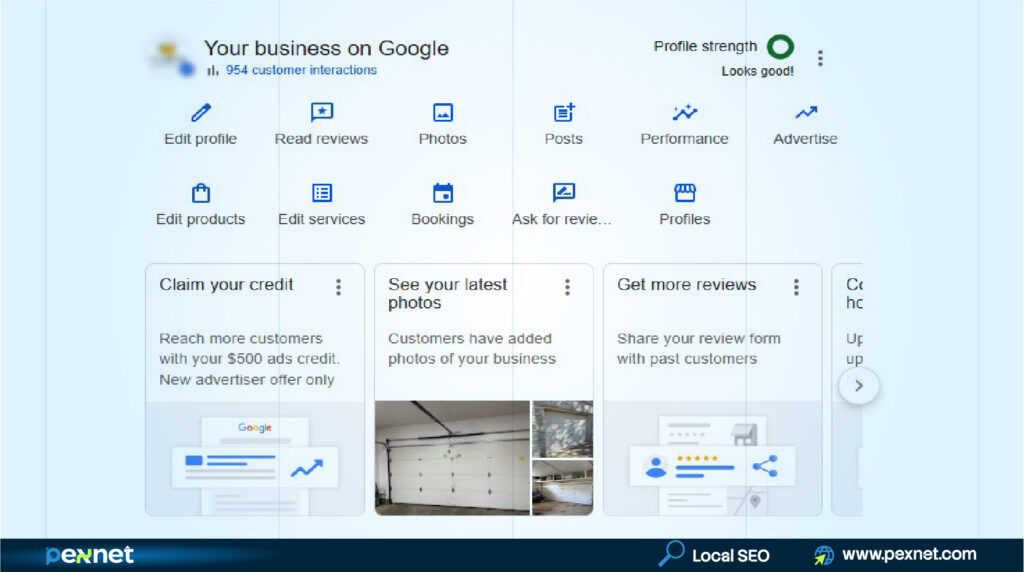
The Google Business Profile (GBP) is the listing Google displays in Maps and the Local Pack. Remember, every field you fill in or neglect matters to your local visibility.
Factor 1: GBP Verification
An unverified GBP listing is essentially invisible. Verified profiles are trusted by Google, eligible for the Local Pack, and included in AI-generated summaries. Unverified ones are frequently excluded from both.
Google now primarily uses video verification, which requires you to record your storefront, signage, and equipment. This helps prevent fake or duplicate listings from gaming the system.
What to do:
- Verify with video if prompted (the most common method in 2026)
- Never let a verification lapse – re-verify if you change your address or ownership
- Check that your listing status shows “Verified” in the GBP dashboard, not “Pending”
Factor 2: Primary Category Selection
Google uses your primary GBP category to decide which searches your listing qualifies for.
For instance, a dental clinic listed under “Health Clinic” instead of “Dental Clinic” might lose searches to every competitor with the right category selected. Similarly, a personal injury attorney listed as “Lawyer” instead of “Personal Injury Attorney” might give up hundreds of relevant queries every month.
Advanced tactic
Open Google Maps and search your core service in your city. Look at the top 3 results in the Local Pack. Check their primary categories. If they use a more specific category than you, switch yours.
What to do
- Audit the primary categories of your competitors for your core keywords
- Add secondary categories for every additional service (for instance, moving companies might add “Packing Service,” “Storage Facility,” or “Truck Rental”)
- Revisit the categories every quarter because Google adds new options regularly
Factor 3: GBP Completeness and Attribute Signals
Google needs every completed field to have a better understanding of your business. Profiles with all attributes completed receive up to 520% more profile views than incomplete ones, according to 2026 data.
The fields that carry the most weight beyond categories:
- Business description
Include your core service, city, and 2–3 supporting services. Keep it factual and specific.
- Services section
List every specific service you offer. To give you some idea, a law firm should list “Personal Injury Consultation,” “Car Accident Claims,” “Workers Compensation,” not just “Legal Services.”
- Products
Businesses with physical products should list them with photos and prices. Google surfaces product listings directly in search results.
- Attributes
They include accessibility, payment options, amenities, and service options. Attributes like “Online Appointments,” “Veteran-Led,” or “Women-Owned” directly affect which filtered searches your listing appears in.
- Business hours
We’ve talked about business hours in detail below. In fact, they’re now a ranking signal.
Factor 4: GBP Business Hours (The “Openness” Signal)
Since the late 2023 algorithm updates, whether a business is “currently open” has become one of the top 5 local pack ranking factors – confirmed by Joy Hawkins of Sterling Sky and validated by a BrightLocal study of 50 businesses across 10 categories.
For high-urgency searches like “emergency plumber,” “dentist open now,” or “carpet cleaning today,” Google actively filters out closed businesses. If your hours say you’re closed when someone searches, you may not appear at all – no matter how optimized your profile is.
Note: If you mark yourself as open 24 hours but don’t answer calls at 2 AM, Google tracks those missed calls as a negative behavioral signal.
What to do
- Set holiday hours proactively in GBP – not after the fact
- Use “special hours” for any day you deviate from your normal schedule
- If you’re a service area business that takes emergency calls, set hours that match when you actually answer the phone
- Monitor missed call signals in your GBP Insights data monthly
Factor 5: GBP Posts – Weekly Freshness Signals
Whitespark’s 2026 report found that businesses posting weekly to GBP receive 70% more engagement than those with inactive profiles. Google reads consistent posting as proof that your business is operating.
Advanced formatting rules
- Keep posts under 1,500 characters since Google truncates after the first two lines
- Upload one high-quality photo per post (minimum 720 x 540 pixels)
- Always include a CTA button (Call Now, Book, Learn More) when linking to an action
- Tie post content to real business activity: a completed project, a current offer, a seasonal service
Factor 6: GBP Q&A
The Questions & Answers section of your GBP profile is one of the most valuable. When a user asks a question and you answer it, that creates keyword-rich, indexed content directly on your listing.
Note: if you leave Q&A unmonitored, anyone can ask questions and anyone can answer them, including incorrect information that damages both trust and conversions.
Advanced Q&A strategy
- Seed your own Q&A section with 5-8 questions your customers ask during the sales process
- Write answers that naturally include your service name, city, and key differentiators
(Example: Q: “Do you offer same-day carpet cleaning in Phoenix?” A: “Yes – we offer same-day carpet cleaning in Phoenix and the surrounding areas. You can book through our website or call directly.”)
- Monitor weekly for new questions from users and respond within 24 hours
- Upvote your own seeded questions to push them to the top of the section
Factor 7: GBP Messaging and Booking Signals
Google tracks whether your GBP messaging feature is active and whether users engage with it. Unanswered messages within Google’s expected window (24 hours) are a negative signal. Businesses that consistently respond become eligible for a “Responds quickly” badge, which improves click-through rates directly.
Booking link integrations help create high-value engagement signals. A user clicking “Book” directly from your profile is the second-highest intent action after “Get Directions.”
What to do
- Enable GBP messaging only if your team can monitor it daily
- Connect a booking integration if your business takes appointments
- Set up an automated initial response if your team isn’t available around the clock; but always follow up personally
Section 2: Review Signals (16% of Pack Weight)
Reviews are the most visible trust signal in local search. They affect your ranking, click-through rate, and conversion rate – all three independently.
Factor 8: Review Velocity Over Review Volume
Here’s what to keep in mind, total review count is a vanity metric. Review velocity – the rate at which you earn new reviews – is what matters most.
A business with 150 reviews all earned three years ago ranks weaker than a business with 80 reviews earned consistently over the last 12 months. Google interprets fresh review velocity as proof the business is still active and customers are still choosing it.
Research from Sterling Sky shows a clear ranking jump when a business moves from 9 to 10 reviews – the first major trust threshold the algorithm recognizes. Getting to 10 should be the first priority for any new listing.
What to do
- Build review requests into your post-service workflow – send the request within 24 hours of job completion, not in monthly batches
- Set a monthly review target per location (4-5 per month for most local service businesses)
- Track velocity in your GBP Insights: if new reviews stop coming in, your ranking will follow
Factor 9: Review Sentiment and Keyword Signals in Review Text
Star ratings are a telltale sign that you’re well-liked, while review text tells Google what you’re liked for.
When a customer writes “they did an amazing job with our emergency water damage restoration in Scottsdale,” Google connects the phrases “emergency water damage restoration” and “Scottsdale” directly to your listing. This is called a Review Justification – and it appears as a highlighted snippet under your listing in certain search results.
Review keywords act as social proof that your listing is relevant for specific queries without requiring you to stuff keywords anywhere yourself.
When asking clients for a review, give them a specific, gentle prompt, like:
“If you could mention the specific service we provided and the city, that would really help other customers know what to expect from us.”
The most satisfied clients will follow your lead. This one prompt helps generate the keyword-rich review text that most competitors never have.
What to do
- Respond to every review (positive or negative) within 48 hours
- Owner responses are indexed and contribute to keyword signals
- Write responses that naturally include service and location terms e.g. “Thank you for trusting us with your dental implants – our [City] team works hard to make every patient comfortable.”
- Never use generic copy-paste responses
Factor 10: Review Diversity Across Platforms
Many don’t know that Google cross-references your reviews from other platforms to build a fuller picture of your reputation. Reviews on Yelp, Facebook, Healthgrades (for healthcare), Avvo (for law), Houzz (for contractors), and industry-specific directories all feed into the broader prominence score.
According to 2026 data, 87% of consumers read online reviews before choosing a local business – and they check an average of 12 reviews across platforms before forming an opinion. If you have strong Google reviews but nothing elsewhere, that gap might weaken your cross-platform authority.
What to do
- Identify the 2-3 most relevant review platforms for your industry beyond Google
- Build a review request sequence that rotates platforms: Google this month, Yelp next month, industry-specific the month after.
- For healthcare: prioritize Healthgrades and Zocdoc
- For law firms: prioritize Avvo and Martindale-Hubbell
- For home services: prioritize Angi, HomeAdvisor, and Houzz
Section 3: On-Page and Website Signals (19% of Pack Weight)
Your website is the anchor that gives your GBP credibility. Google uses your site to verify that your GBP claims are true, understand your service depth, and evaluate your technical authority.
Factor 11: Location-Specific Service Pages
Every service and every city you serve should have its own dedicated page. Many businesses prefer a single service page – the worst SEO mistake one can make.
Data from 2026 shows that 83% of top organic local results have a dedicated location page, and businesses with dedicated service pages rank for significantly more queries than those with bundled content.
The right structure for local service pages
A page targeting “carpet cleaning in Denver” should include:
- An H1 that uses the exact service + city: “Carpet Cleaning in Denver, CO”
- A description of the service specific to that market (mention neighborhoods, common issues in that area, local conditions)
- At least 3 local trust signals: service area coverage, local phone number, local testimonials
- An embedded Google Map
- LocalBusiness + Service schema markup
- Internal links to related services and the main services hub
So, what makes a location page fail? Copying the same template and swapping city names.
Factor 12: Schema Markup (Structured Data)
Schema markup is code that tells search engines and AI models exactly what your content means. For local businesses, it removes all ambiguity about who you are, what you do, where you are, and when you’re open.
This matters more now than it ever has. 67% of AI Overviews for local queries reference GBP data directly, and AI models like ChatGPT, Perplexity, and Gemini all use structured data to generate their local recommendations. Without schema, your business is harder for these systems to verify and recommend.
You’ve to use the most specific LocalBusiness subtype available for your industry – “Dentist,” “LegalService,” “HomeAndConstructionBusiness,” “AutoRepair” – not the generic “LocalBusiness.”
Advanced tip: Implement `sameAs` markup linking your schema to your GBP URL, Yelp page, Facebook page, and Wikipedia page (if applicable). This creates entity links that help AI models triangulate your identity across platforms and increases your AI visibility score.
Factor 13: NAP Consistency
NAP stands for Name, Address, Phone number. Every time your business information appears on a directory, review site, or listing, it’s called a citation. Google and AI platforms cross-reference these citations to verify your business is legitimate.
Inconsistencies (even small ones like “St.” vs. “Street” or a missing suite number) create doubt in the algorithm. If your phone number on Yelp is different from the one on your website, that’s a verification failure.
Advanced NAP considerations
- Your business name in citations must match your GBP name exactly – no keyword additions, no shortened versions
- Use a single consistent phone number format across all platforms (e.g., always “(602) 555-0100” not “6025550100” on some and “602-555-0100” on others)
- After a business move, address outdated citations within 30 days – old addresses linger for years if not cleaned up
- Tools like BrightLocal’s Citation Audit or Whitespark’s Citation Finder identify every inconsistency across hundreds of directories
Factor 14: Core Web Vitals and Mobile Performance
64% of all local searches happen on mobile devices. If your site loads slowly or delivers a poor mobile experience, users bounce back to Google, and that bounce is a negative ranking signal.
Google’s Core Web Vitals measure
- LCP (Largest Contentful Paint): How quickly the main content loads. Target: under 2.5 seconds.
- INP (Interaction to Next Paint): How fast the page responds to user input. Target: under 200ms.
- CLS (Cumulative Layout Shift): How much the page layout shifts while loading. Target: under 0.1.
A 2026 study found that 53% of mobile users abandon sites that take longer than 3 seconds to load, and those abandoned visits register in Google’s behavioral data as dissatisfied users.
What to do
- Run a Core Web Vitals audit in Google Search Console monthly
- Switch to a fast hosting environment (LiteSpeed or NVMe-based hosting makes a measurable difference)
- Compress and serve images in WebP format
- Eliminate render-blocking JavaScript on above-the-fold content
- Use lazy loading for images below the fold
Factor 15: Topical Authority with Content Clusters
Local SEO is no longer just about ranking individual service pages. Google now checks to see whether your website has deep, interconnected topical coverage because it uses that data to determine your niche expertise. So, this is one of the most important local SEO ranking factors these days.
Usually, for dental SEO, a practice that has a blog post about every aspect of dental care (such as teeth whitening, implants, gum disease, braces, or emergency dental care) builds stronger topical authority than a competitor with a single services page.
Even if the competitor is closer to the searcher, the clinic with deeper topical coverage has more ranking potential because Google trusts it more.
Here’s a good content cluster structure for local businesses:
- Pillar page: Your main service page (e.g., “Dental Implants in Phoenix”)
- Cluster pages: Supporting blog posts that cover related questions:
- “How long do dental implants last?”
- “Dental implants vs. bridges: which is right for you?”
- “What to expect during dental implant surgery”
- “Dental implant cost in Phoenix: what you need to know”
- Internal linking: Every cluster page links back to the pillar page and to related cluster pages
This structure shows you’re not just listing a service, you’re the authoritative local resource on that topic.
Section 4: Link Signals (15% of Pack Weight)
Factor 16: Local Backlinks & Entity Authority
Try to get links and mentions from locally relevant websites. A link from your city’s Chamber of Commerce, a local news article, a community organization sponsorship, or a regional business directory carries real ranking weight – far more than a generic link from an out-of-market site.
In 2026, the concept of backlinks has expanded into “entity authority” – how consistently your business is mentioned and referenced on the web, not just linked.
AI platforms like ChatGPT and Perplexity now look for what researchers call “co-occurrence” – your business being mentioned alongside trusted local landmarks, organizations, and industry terms to confirm you’re a legitimate, established player in your market.
Here are some advanced local link building tactics for you in short:
- Sponsor local events
Event pages usually link to sponsors. Youth sports sponsorships, charity runs, and community festivals are low-cost, high-quality link sources that you can consider.
- Local press coverage
You can pitch a local news story tied to your expertise. For instance, a restoration company can pitch a story about preparing homes for storm season, while a law firm can comment on a local legal development. They generate editorial links from high-authority local news domains.
- Chamber of Commerce and business associations
Their membership usually includes a directory listing with a link.
- Partner with complementary businesses
Here are some ideas: a dentist can partner with an orthodontist for cross-mentions. Or, a moving company can partner with the local real estate agents.
- Resource pages
You can also create a useful local resource like “Complete guide to water damage restoration claims in [City]” and reach out to local blogs and news sites that might link to it.
Factor 17: Citation Volume and Tier Prioritization
To put it simply, citations are mentions of your NAP on external sites. They still account for 7% of Local Pack ranking weight, but not all citations are equal.
A citation from Yelp carries more weight than one from an obscure directory. And having 200 citations with inconsistent data is worse than having 50 citations with perfect consistency.
You need to be familiar with the different citation tiers for local businesses:
Tier 1 (Critical)
Google Business Profile, Yelp, Facebook, Apple Business Connect, Bing Places, Yelp, Better Business Bureau, Yellow Pages
Tier 2 (High value)
Industry-specific directories, such as Avvo for law, Healthgrades for healthcare, Angi for home services, and Houzz for contractors
Tier 3 (Supporting)
Local Chamber of Commerce, regional business directories, city-specific sites
Note: Build citations in this order because Tier 1 citations have the highest impact and the most verification weight. Don’t waste your time on 200 Tier 3 citations before your Tier 1 and 2 profiles are complete and consistent.
Section 5: Behavioral Signals (8% of Pack Weight)
Factor 18: High-Intent Behavioral Signals
Google tracks every interaction between the user and your GBP. These behavioral signals function as real-world votes of confidence, and they’re impossible to fake over the long haul.
Signal hierarchy by ranking impact:
1. Direction requests
They are the highest-intent signal possible. A user asking for directions is seconds away from visiting your business.
2. Click-to-call
It indicates the user is ready to act. Frequent calls from search results verify that you’re active and in demand.
3. Website clicks
They show that users trust your listing enough to learn more.
4. Booking actions
The second most powerful intent signal after direction requests.
5. Photo views
They indicate user interest and engagement with your visual content.
6. Messaging
It shows active engagements with your listing.
GBP actions have grown 1% year-over-year in 2026, meaning there are more behavioral signals flowing through the system than ever before – and Google is weighting them accordingly.
Factor 19: Click-Through Rate from Search Results
When Google shows your listing in the Local Pack and users choose your result over competitors, that’s a positive CTR signal.
CTR is influenced by everything visible before the click:
- Star rating and review count
Listings with 50+ reviews get 35% more clicks in the Local Pack.
- Primary photo quality
The first photo users see matters more than most businesses realize.
- Business name
Listings where the business name naturally contains the search term get a small but measurable CTR boost (which is why keyword stuffing in business names is tempting – but penalized).
- Review snippet
A relevant, recent review snippet shown under your listing increases perceived credibility.
- Open/closed status
Listings marked “Open now” get disproportionately higher CTR for time-sensitive searches.
What to do:
- A/B test your primary GBP photo – replace it and monitor CTR changes in Insights
- Prioritize getting to 50+ reviews to unlock the click multiplier
- Keep your business description sharp – it appears in some search surfaces and influences CTR
Factor 20: Dwell Time and Pogo-Sticking
Once a user clicks through to your website from the Local Pack, Google tracks what happens.
If they stay on your site, read content, and take action – that’s a strong positive signal. However, if they land and immediately hit the back button to return to Google (called “pogo-sticking”), that’s a direct negative signal.
Dwell time and pogo-sticking are behavioral feedback loops. If your site consistently fails to satisfy local searchers, it will slowly lose Local Pack positions to competitors whose sites hold attention.
What to do
- Ensure your landing page directly answers the searcher’s intent – if someone clicked “carpet cleaning Phoenix,” they should land on a page specifically about carpet cleaning in Phoenix, not your homepage
- Load your most credible trust signals above the fold: star rating, review count, years in business, service area
- Use click-to-call buttons prominently on mobile – they remove friction for the most common local search action
- Test page load speed with Google’s PageSpeed Insights and target a score above 85 on mobile
Section 6: Entity Authority and AI Search Signals
The rise of AI-powered search has introduced some new local SEO ranking factors.
Factor 21: Cross-Platform Presence (Apple Maps and Bing Places)
Did you know that 43% of local searches now trigger AI Overviews or AI-generated summaries? And 67% of those AI Overviews reference GBP data directly? That means the same profile optimization that helps you rank in the traditional Local Pack also feeds the AI results that are increasingly displacing it.
But here’s what most businesses miss: ChatGPT primarily uses Bing’s local data to answer location-based queries.
Also, Apple Maps powers every Siri result, every Apple Wallet location search, and every iOS navigation request.
If your Bing Places and Apple Business Connect profiles are incomplete or inconsistent with your GBP, you’re invisible to a large portion of AI-generated recommendations.
Platform-specific priorities:
- Bing Places
Sync directly from your GBP to Bing Places. This single step makes your business data accessible to ChatGPT, Microsoft Copilot, and Bing local results. Verify the sync worked – it doesn’t always transfer cleanly.
- Apple Business Connect
Create or claim your listing, verify it, and complete every field. Use Apple’s “Showcases” feature to promote current offers directly on Apple Maps. This drives Apple-ecosystem engagement signals back into your overall authority score.
- Yelp
Claimed, complete profiles on Yelp feed into Apple Maps data, Yelp Fusion API (used by third-party AI apps), and multiple voice assistant results.
Factor 22: Entity Confidence and Data Triangulation
AI search systems don’t just read your GBP, they cross-reference dozens of sources to build a confidence score for your business’s identity.
This is called “entity confidence,” which means how certain an AI model is that the information about your business is accurate and that your business is who it claims to be.
Remember, every inconsistency in your business data reduces entity confidence. And every additional consistent, authoritative source that mentions your business increases it.
The Data Triangulation Principle
When your business name, address, phone number, website, and service descriptions appear consistently across Google, Bing, Apple, Yelp, Facebook, your industry’s top directory, and at least one local news mention – AI models treat your business as a verified, trustworthy entity.
That increases both AI recommendation frequency and traditional Local Pack rankings.
Advanced schema for entity signals:
Add `sameAs` markup to your website’s schema linking to:
- Your Google Business Profile URL
- Your Yelp page
- Your Facebook Business Page
- Your LinkedIn Company Page
- Your Bing Places listing
This creates machine-readable entity connections that tell AI crawlers: “These profiles are all the same business.”
Factor 23: GBP Photo Freshness and Visual Search Signals
Google Lens handles over 15% of local discovery in 2026. That means a meaningful portion of your potential customers are finding local businesses through visual search – and Google’s AI is analyzing your photos to decide whether to surface your business.
Stock photos tell Google nothing. An authentic photo of your branded van parked outside a residential job site, your team in uniform at a service call, or a before-and-after restoration project communicates what you do in a way that text never can.
A Birdeye’s 2025 State of GBP report found Profiles with recent photos and video outperform those with stale imagery on website visits, direction requests, and calls – even when total photo count is the same.
Advanced photo strategy:
- Upload new photos at least twice per month (set a calendar reminder)
- For service businesses: photograph every significant job (with client permission) and upload within 48 hours
- For retail: photograph new inventory, seasonal displays, and in-store activity monthly
- Name your image files descriptively before uploading: “water-damage-restoration-phoenix.jpg” not “IMG_4821.jpg”
- Use geotagged photos when possible – some tools allow you to embed GPS coordinates in image EXIF data, which adds a proximity confirmation signal
Factor 24: Voice Search Optimization
Voice search is 3x more likely to carry local intent than text search.
When someone asks Siri “find a good dentist near me” or asks Google Assistant “best moving company in Dallas,” the business that wins is the one Google trusts most to give a single, accurate, and locally relevant answer.
Voice search queries average 29 words compared to 3.5 for text searches. They’re conversational and question-based. Optimizing for voice means making your content sound like a direct answer to a spoken question.
What to do:
- Add a detailed FAQ section to your location pages answering the exact questions voice users ask: “Are you open on weekends?” “Do you offer free estimates?” “How long does [service] take?”
- Structure FAQ answers in a concise, conversational format – first sentence answers the question directly, second sentence adds context
- Implement FAQPage schema so Google can pull your FAQ content into voice responses
- Ensure your GBP hours, address, and phone number are 100% accurate – voice results almost always pull from GBP for hours, address, and phone number queries
Factor 25: Social Signals and Brand Mentions
Social media activity doesn’t directly change your Local Pack ranking, but it creates a cascade of indirect signals that do.
Active social engagement drives:
- Increased brand searches
When people search your business name directly after seeing you on social media, that’s a high-value behavioral signal.
- Natural backlinks
Content that gets shared socially sometimes earns links from blogs and news sites.
- User-generated content
Customer photos and check-ins tagged at your location add geographic confirmation signals.
- Review generation
Social audiences convert to reviewers at a higher rate than cold audiences.
Advanced social signal strategy
- Post job-site content on Instagram and Facebook (real work photos tied to your location create geo-tagged content that reinforces your local presence)
- Encourage customers to check in at your location or tag you in their posts
- Use your social profiles to drive traffic to your review profiles – a weekly Story reminding followers to leave a Google review is a simple, scalable review velocity tactic
Section 7: Proximity and Service Area Signals
Factor 26: Physical Location and GeoGrid Performance
Perhaps you know that Proximity is one of the three core ranking pillars. But you can measure and understand exactly how far your current prominence and relevance signals extend geographically.
A GeoGrid scan runs your target keywords across a grid of GPS coordinates around your business location and shows where you rank #1–3, where you fall off the first page, and where competitors dominate.
Here’s what a GeoGrid tells you:
- Which neighborhoods you rank well in vs. where you’re invisible
- Whether your coverage area matches the service area you actually want to serve
- How algorithm updates affect your coverage over time
- Where to focus content and link-building efforts to extend your radius
Factor 27: Localized Landing Pages for Service Area Businesses
Service area businesses (SABs) like carpet cleaners, moving companies, law firms, and restoration companies serve multiple cities but often have one physical location or no public address. Location pages are how they establish relevance and prominence in areas beyond their immediate proximity zone.
A well-built location page for “carpet cleaning in Tempe” can rank a Phoenix-based business for searches 15 miles from their address.
Here’s what separates a ranking location page from a thin one:
- Locally specific content (reference Tempe neighborhoods, local landmarks, or area-specific conditions)
- A local phone number for that service area if possible (or at minimum, a tracking number)
- Testimonials from customers in that city
- A service area map showing coverage
- Internal links to your main service page and related blog content
- LocalBusiness schema with the service area city specified
One moving company shouldn’t have one “Moving Services” page. It should have “Moving Companies in Phoenix,” “Moving Companies in Scottsdale,” “Moving Companies in Tempe” – each built to rank for its specific market.
Section 8: Negative Ranking Factors to Avoid
Knowing what not to do is as important as knowing what to do. These are the fastest ways to lose rankings you’ve worked hard to build.
Factor 28: Business Name Keyword Stuffing
Google’s August 2025 Spam Update specifically targeted GBP listings that add keywords to their business name that don’t appear on their actual signage or legal registration.
If your legal name is “Smith Plumbing LLC” but your GBP says “Smith Plumbing | Drain Repair | Emergency Plumber Dallas,” that’s a clear violation.
Unfortunately, Google is suspending profiles for this, and a suspension wipes your entire ranking history.
The risk-reward calculation is simple: the keyword boost from stuffing your name is small. The penalty from suspension is catastrophic.
Factor 29: Buying or Incentivizing Fake Reviews
Google’s review spam detection has become sophisticated enough to identify coordinated fake review activity – patterns of reviews from new accounts, reviews posting from the same IP range, or review surges that don’t match your customer volume.
Losing reviews drops you below ranking thresholds. Getting suspended for policy violations takes months to recover from. And from April 2024, the FTC has explicitly penalized businesses for undisclosed incentivized reviews.
Build reviews through genuine post-service requests, not shortcuts.
Factor 30: Neglecting Review Responses
Leaving reviews unresponded is a missed opportunity that also signals disengagement to the algorithm. In fact, consumers are more likely to choose a business that responds to all reviews – positive and negative.
Negative reviews that receive thoughtful, professional responses have the power to turn skeptical readers into customers.
Factor 31: Inconsistent or Outdated NAP Data After Business Changes
When businesses move, change phone numbers, or rebrand, they often update Google but forget the 40+ other directories where their information lives. Old address data on Yelp, Yellow Pages, Apple Maps, and Bing creates citation conflicts that undermine entity confidence for months.
After any business change, run a citation audit within the first week and update every directory systematically – not just the ones you remember off the top of your head.
The Bottom Line
Our seasoned local SEOs at Pexnet shared all the core and supporting local SEO ranking factors in detail. Don’t worry if so much information looks too much for you to handle.
Start with the Critical-priority factors in the table above. Build the habit of weekly GBP activity. Fix your citations. Then work your way through the remaining factors systematically.
If you want to see exactly where your local SEO stands and which factors are costing you the most rankings right now, book a free consultation so our SEOs can help you with that.
FAQs
1: How long does it take for local SEO changes to show up in rankings?
GBP category changes and hours updates can impact rankings within 1–2 weeks. Review velocity improvements typically show ranking movement after 4–6 weeks of consistent acquisition. On-page changes like adding location pages take 4–8 weeks to index and gain traction. Backlink-driven improvements usually take 1–3 months.
2: Does hiding my business address hurt my ranking?
No, if you’re a service area business that doesn’t serve customers at your location, hiding your address follows Google’s own policy and does not directly reduce rankings. What matters is service area accuracy, not address visibility.
3: What’s the most important local SEO ranking factor in 2026?
GBP signals collectively account for 32% of Local Pack ranking weight – making GBP optimization the single highest-leverage category. Within GBP, primary category selection is the most impactful individual signal, followed by review velocity and profile completeness.
4: How do I rank in ChatGPT and AI search results?
Sync your GBP to Bing Places – ChatGPT uses Bing for local data. Build consistent citations across Tier 1 directories. Implement LocalBusiness schema with `sameAs` links. Maintain consistent NAP across all platforms. These steps build the entity confidence that AI systems use to recommend businesses.
5: How many reviews do I need to rank in the Local Pack?
The first significant ranking jump occurs at 10 reviews. The next threshold is around 50 reviews, where CTR increases substantially. Top Local Pack results in competitive markets usually have 87–142 reviews (for home services) to 287–312 reviews (for restaurants and hospitality).

Riadul Islam
Riad is a Senior SEO Consult who lives and breathes all things SEO. With 11 years of SEO experience under his belt, he’s now deeply involved in applying AI search technology and data science into niche-specific SEO. He’s an active member of top SEO forums to keep his strategic thinking, problem-solving, and creativity supercharged.