Moving Company Marketing Strategies to Get More Quote Requests
Moving SEO
September 10, 2026
Last updated: October 6, 2026
Many moving companies think their biggest marketing challenge is being visible everywhere: every social media platform, every lead acquisition channel, and every customer touchpoint.
It’s not true. Today’s marketing challenge has three parts: showing up where customers are actually making decisions, giving them enough confidence to choose you, and making it ridiculously easy to take the next step.
That journey starts long before the quote request comes. A customer might discover your company through Google Maps, see your truck in their neighborhood, hear about you from a realtor, read your reviews, visit your website, and finally call for an estimate.
Your moving company marketing plan needs to support every one of those moments.
In this guide, we’ll break down the most effective online and offline marketing strategies for moving companies, explain which ones belong in your foundation and which are better for growth, and show you how to decide what to run first based on your growth stage and budget.
TLDR: Start with the foundation: optimize your GBP, build a review system, strengthen local SEO, and ensure speed-to-lead. Next, add growth channels: content marketing, AI search visibility, LSA, PPC, email, referral partnerships, and targeted direct mail. Use offline strategies and situational channels to feed your lead generation system. Don’t try to be everywhere; build trust first, and measure everything.
What Moving Company Marketing Looks Like in 2026
A few years ago, moving business marketing was simpler: rank in Google, run ads, collect leads, and follow up. People would search for a moving company online, pick the top results, compare their service quality/reviews, and call them for a quote.
Nowadays, customer journeys are not that linear. Modern-day marketing is far more comprehensive. BrightLocal’s 2026 research found that only 6% of consumers “just click the top result.”
For a moving company, just putting your business in front of potential customers isn’t enough anymore. You also need to earn their trust before a competitor does and turn that attention into booked jobs.
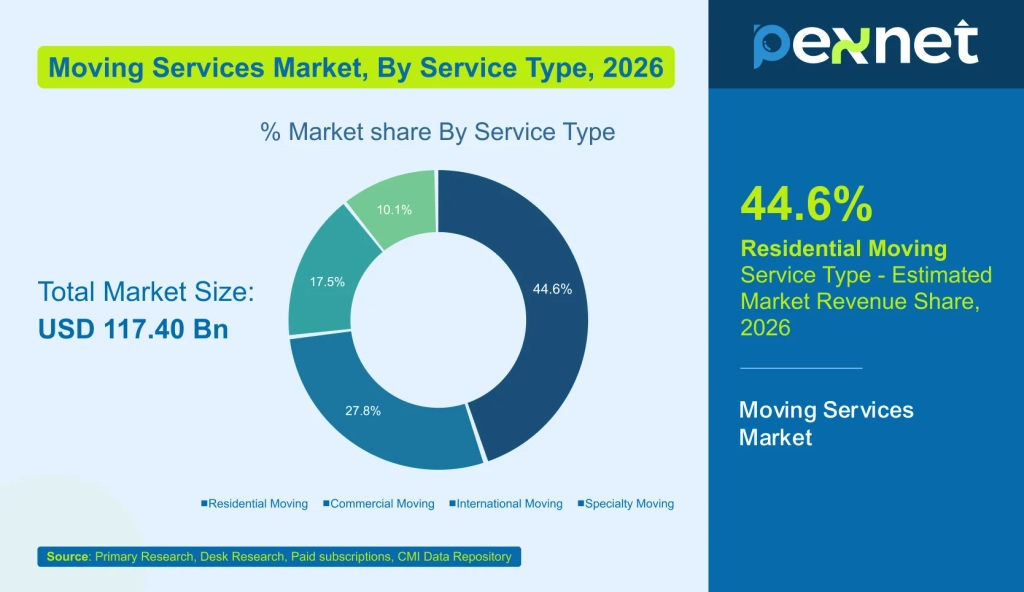
As a result, modern-day marketing for moving companies has expanded way beyond just focusing on a few channels for visibility. It now includes a full set of online and offline tactics that compound as a unified system to answer these five questions across the internet:
- Can customers find you conveniently?
- Can they quickly understand what you offer?
- Does your business look trustworthy?
- Can they request a quote without friction?
- Does someone respond before they call the next mover?
In a nutshell, modern-day marketing strategies for a moving company refer to a full set of strategies that work both online and offline to build enough visibility and trust across several touchpoints so that a customer feels confident choosing you.
The Way People Actually Choose a Moving Company
Unlike many other service industries, moving companies face a different set of challenges: the buying window is comparatively short, the intent is hyper-local, demands fluctuate heavily with seasons, and people make decisions based on trust signals.
Think about it. Most times, people look for movers based on a trigger: they just bought a new house, their lease is ending, they’re relocating, or facing a move-out deadline. That’s why most moving enquiries become urgent.
The search starts with the customer googling geo-modified search terms like “moving companies near me,” or “movers in [city].” SERP and local map pack showcase a few options, and the comparison begins.
Moving customers usually compare reviews, service quality, response time, and quotes before finally booking a job. Also, AI is increasingly becoming a significant part of local business discovery.
A typical workflow looks like this:
Discovery >> Trust >> Quote request >> Fast response >> Follow-up >> Booked move.
The sole purpose of moving company marketing is to put your company in front of people when moving intent appears, then remove enough uncertainty that contacting you feels like the obvious next step.
That’s why, local mover marketing primarily depends on local visibility, reviews, fast response, and referral relationships. Getting featured by AI-assistants is also important.
Smart moving companies connect several pieces to create a unified system rather than treating every channel as a separate project.
The Marketing Funnel Behind a Quote Request
Getting someone to notice your moving company is only the beginning. There are a few stages between your prospects thinking “I need movers” and “I’d like a quote.”
The marketing funnel starts with visibility: get discovered when moving intent appears. People may find your business through local Map Pack, organic SERP, LSAs, paid search, AI recommendations, referrals, or even one of your trucks driving through their neighborhood.
Next comes trust: give your prospects a reason to choose you. People won’t contact you just because you’re visible. They’ll usually compare your reviews, photos, service areas, website, and look for signs that you’re a legitimate, professional operation.
That’s where reputation does much of the selling.
Once a prospect is interested in your services, your next job becomes to guide them toward the action: calling your business, requesting a quote, or sending a message. This stage needs to be as frictionless as possible. Every unnecessary step here increases the risk of the prospects contacting another mover.
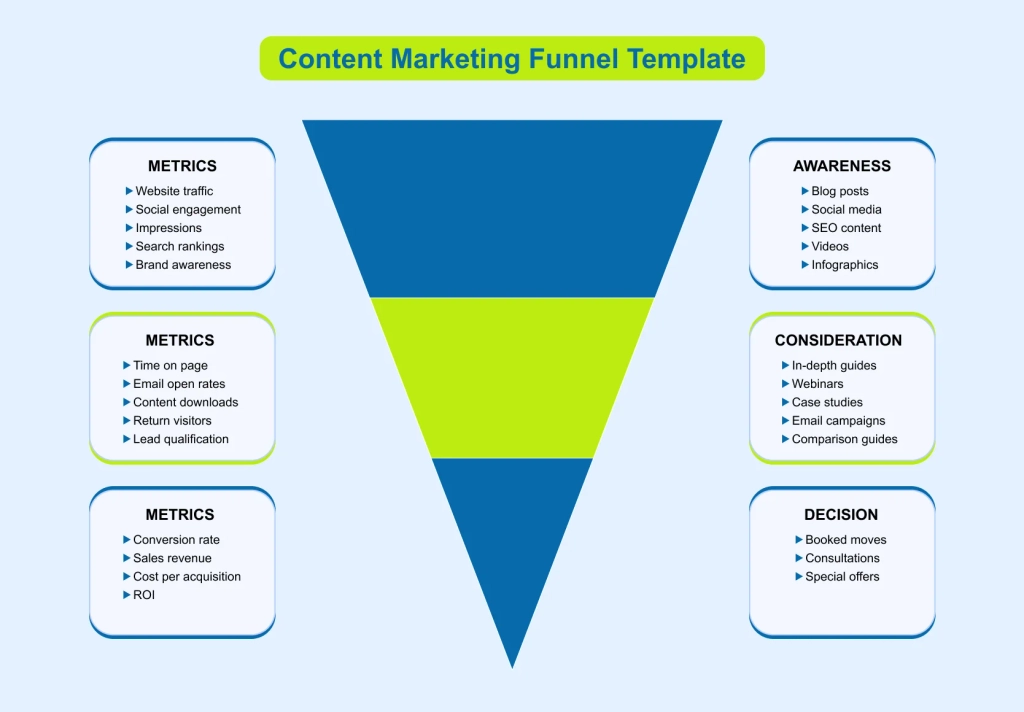
Your response matters too. Despite not being a dedicated marketing metric, your response time determines how much value you actually get from your marketing. Timely follow-ups and fast responses prevent your leads from going cold.
Lastly, you turn your marketing into revenue. You use trust signals to transform qualified prospects into booked moves. A channel that generates 30 leads and converts 20 of them is far better than a channel that generates 100 leads, but converts only 30.
Online Marketing Strategies for Moving Companies
There are several online marketing strategies you can follow for your moving company, but all those strategies aren’t equal.
Some of them are fundamental: helping you capture existing demand; some are growth-focused: helping you reach more prospects or build authority; and some are situational: helping you increase your efficiency depending on the specific situation you’re in.
Below is a list of online marketing channels with explanations on what they do, how they do it, which stage they’re on, and why your moving company should care. Judge every channel on four numbers (leads, qualified leads, booked moves, and acquisition cost) to find out the most effective one.
1. Google Business Profile and the Map Pack: Foundation
When a prospect starts their search for a moving company, often they focus on the local listings: the map pack. For many local movers, the Map Pack is one of the most important places customers compare their options.
The businesses that appear in the local pack have a huge advantage: they can showcase their name, rating, reviews, photos, services, phone number, and other business information even before the prospect lands on their website.
Your Google Business Profile (GBP) is your ticket to becoming visible in the map pack. For your local moving company, GBP is your biggest marketing asset since it helps with both visibility and conversion.
A well-optimized profile helps Google understand what you do and where you operate. A well-maintained profile helps a potential customer decide whether you’re worth calling.
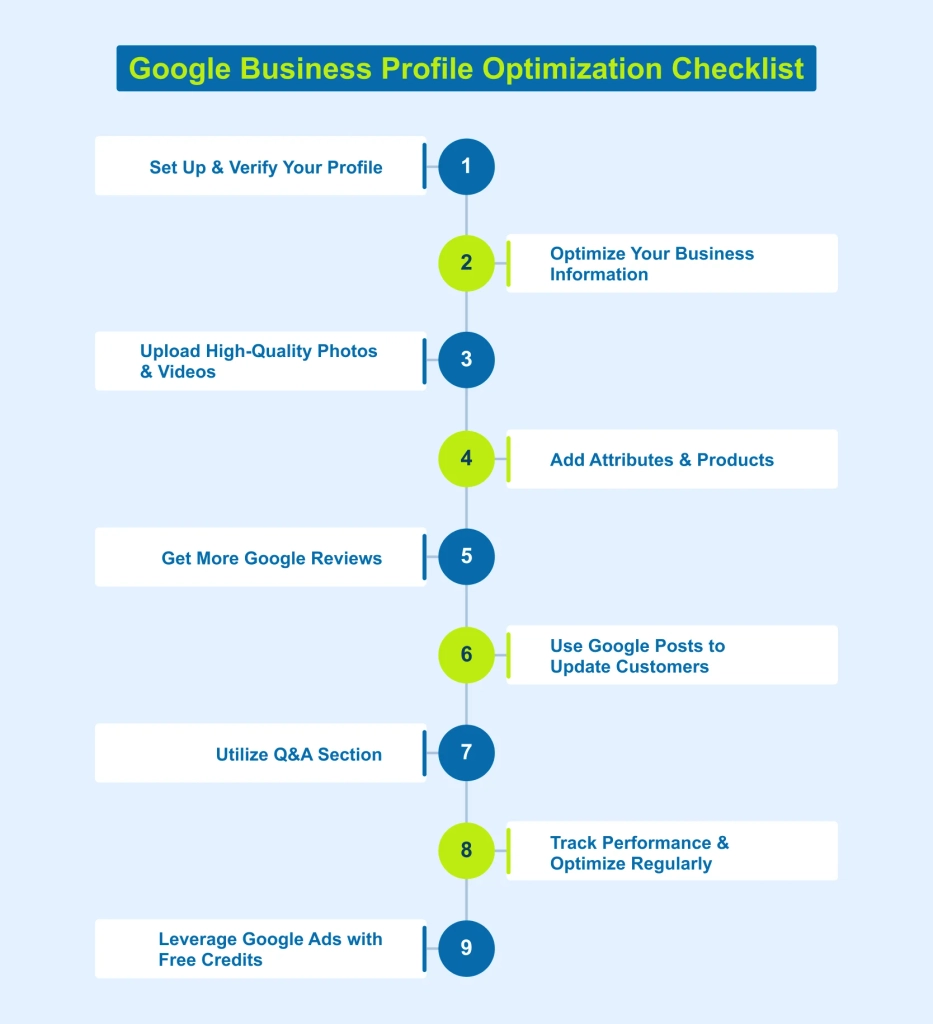
Here’s the playbook on how to optimize your GBP for maximum local visibility, focusing on the fundamentals first:
A. Categories:
This is the most important setting in your GBP, as Google will use this to understand what kind of business you are and which searches may be relevant for you to show up.
Set “Moving company” as your primary category. Then add relevant secondary categories that fit: “Mover,” “Storage facility,” “Packaging supply store,” or “Piano moving services.” This increases your chance of showing up against those specific searches.
However, don’t add categories simply because you want to rank for more keywords. They should represent services or business types you genuinely provide.
If you add a wrong category, your business won’t show up in relevant search results, the leads you get won’t be qualified, or even worse: Google might suspend your profile.
B. Services
Next, list all the services your business provides: local moving, long-distance moving, packing, loading-unloading, and any other specialty services you may offer. Also, add a short description for each of those services.
That’ll help Google understand your services and surface these services when people search for relevant offerings. Use simple, descriptive language that your customers type into the search bar.
C. Service Areas:
Move on to your service areas. List all the cities and zip codes you actually cover. You can use up to 20 locations, but we suggest focusing on your neighborhood. Fake coverage will do you more harm than good.
If you’re a service-area business, hide your physical address on your GBP, and maintain a 2-hour drive radius from your physical location (if you have any).
D. Business Info:
Keep your business details accurate across all of your profiles. This includes your website, GBP, and every other listing. Start with the NAP data: your name, address, and phone number. Make sure each piece of information is exactly the same everywhere.
Also, add your business hours, holiday hours, a local phone number, and your experience. This will help you develop a unified entity for your moving business. More on that later.
E. Description:
Next, add your other relevant business data, including your real name and business description. Google’s guidelines suggest that you outline your core services, history, and mission in this field.
You’ll get a limit of 750 characters for the description, but Google will showcase around 240-250 characters in the map results. So, put your name, primary category service, location, and your unique selling proposition (USP) inside those first 250 characters.
And for the rest, clearly state your target audience, and end it with a natural CTA (Call To Action). Don’t use links, promotional language, misleading claims, or any other unnecessary information.
F. Photos:
We’re done with the fundamentals. The rest of the settings will help your profile look active and build trust. So, they’re also important.
Let’s start with your photos. You can use them to showcase the things customers care about: what hiring you actually looks like. Add photos of your truck, moving crew, equipment, packing/loading jobs, branded uniform, team members, or completed jobs (with permission).
Don’t use stock or AI-generated photos, as that can deter customers from contacting your business.
G. Reviews:
For a local moving company, reviews are one of the most important trust signals that impact local visibility. The way you collect and manage reviews will highlight how your business interacts with the customer: both present and future.
Replying to every review is especially important since your future customers will use them to judge your company. We’ll talk more about reviews in the next section.
H. Q&A:
The Q&A section of your GBP profile helps reduce friction by answering common questions a prospect might have before calling your business. They can also be used to add useful information about your business.
However, clarity and accuracy matter more here than just the number of questions. Add common queries you face about your pricing, service areas, business hours, and appointment availability.
This will reduce customer uncertainty, increase conversions, and improve the overall user experience.
I. Posts:
Google rewards profiles that are active. You can periodically publish posts containing updates, offers, events, and other information. While they don’t work as a direct ranking signal, they showcase that your business is actively engaging with the community.
However, quality matters here too. Don’t post only for the sake of making your profile look active. A useful update about a service, seasonal availability, packing tips, or relevant company announcement is more valuable than publishing generic content nobody needs.
J. Messaging & Booking Options:
You’ll also need to make your profile easy to act on. Once someone has found your business and decided you’re worth considering, the profile should make the next step obvious and convenient. Don’t make a prospect dig through your profile or leave Google to figure out how to contact you.
That means keeping your phone number, website, hours, services, and other customer-facing information accurate. This also includes adding customer messaging or booking options where applicable.
For a moving company, the most valuable action is usually simple: Call or request a quote.
To sum up, you’ll need to make sure that your GBP accurately represents your moving business before worrying about advanced optimization. An active, fully-optimized profile beats a bigger competitor’s half-empty one in more ways than you think.
One thing to remember: update your GBP regularly. Rather than treating your GBP as a one-time setup project, treat it like an ongoing, customer-facing marketing asset since that’s what it actually is.
2. Local SEO, City Pages, and Citations: Foundation
When someone searches for local terms like “moving company in Phoenix, local movers near me, or long-distance movers in San Antonio”, Google has to decide which businesses and pages are relevant to that search.
Your GBP will help you put your moving company on the map. Local SEO is how you build visibility beyond that. The job of local SEO is to give Google enough consistent, useful evidence to understand what you offer, where you operate, and why your business is relevant to people in those locations.
When done right, local SEO for moving companies produces inbound leads with no per-click cost, month after month. Here’s how you optimize your local presence:
A. Create Location-Specific Service Pages
Start with your core services. Build dedicated website pages for each of the core services you offer: local moving, packing, loading/unloading, office relocation, commercial moving, or any other specialty moving services. Then, connect those services to the locations you genuinely serve.
Avoid using a generic template with swapped city names. Google will treat them as doorway spam. Instead, create useful landing pages for locations or services that you can claim and prove. Add localized, helpful content to those service/location pages specific to that market or neighborhood.
B. Manage Your Links and Citations Strategically
Next, make sure that your citations are accurate across all of your listings. Whether it’s a moving industry-specific directory, chamber of commerce listing, or a third-party review platform (BBB, Angi, or Yelp), your business details (especially your NAP data) should be accurate and consistent everywhere.
Wrong business data creates ambiguity around your business and contact information, confusing both your users and search engines. And as for the citations themselves, focus on accuracy, consistency, relevance, and legitimate local presence rather than getting local citations from random irrelevant sites.
Also, don’t forget to connect your location and services pages to the rest of your website with logical relationships. That’ll help users navigate your website better, search engines understand the relationship between your service and locations, and strengthen your website structure.
C. Build Local Relevance Beyond Directories
The strongest moving company local SEO strategies don’t lean on citations or local backlinks alone. You need to look for legitimate ways to establish your company within the communities you serve.
For instance, local sponsorships, news coverage, community organizations/events, or local resource pages: all of them can create genuine mentions and links while also putting your brand in front of people who actually live in your service area.
For a moving company in particular, relevant industry associations and local partnerships with real estate agents or property managers can be very useful, as they can provide both local relevance and referral opportunities.
In a nutshell, business outcomes become the things you keep an eye on. Rankings show you whether your visibility is changing. Quote requests and booked moves help you discover whether that visibility is worth having.
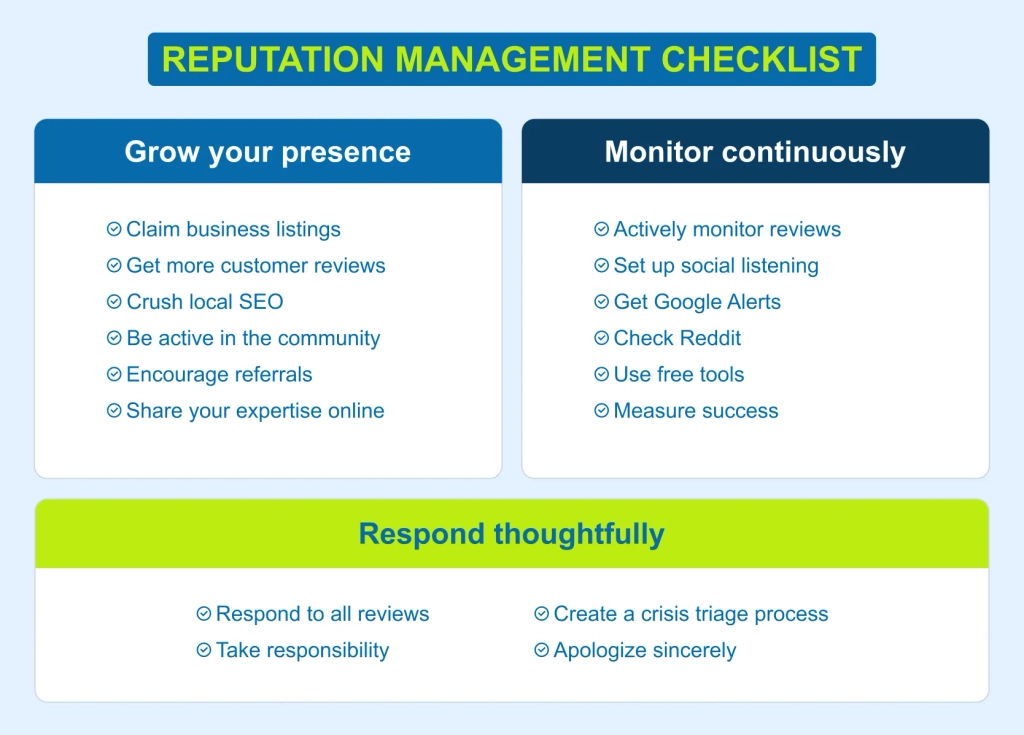
3. Reviews and Reputation Management: Foundation
Just like I mentioned, reviews are one of the most important trust signals for a local moving company. They reveal how your business interacts with customers in real life. They’re evidence that you’re actively serving customers, delivering consistent experiences, and earning trust in real time.
However, customers don’t evaluate reviews the way business owners do. So, chasing as many 5-star ratings as possible sounds good, but it isn’t realistic. Here’s what to focus on instead:
A. Review Velocity
When it comes to local SEO for movers, review recency/frequency is just as important as review volume. That’s why a profile with 50 fresh reviews can beat a profile with 300+ 2-year-old reviews.
That’s why you need to establish a review management system that automates the ask after every successful move, mentions specifics, highlights the client’s experience, and replies to every customer feedback.
You also need to make the process of ‘leaving a review’ as frictionless as possible. The easier it is to leave feedback, the more consistent your review velocity becomes. After every completed job, send your clients a text message containing the direct review link.
B. Review Management
A repeatable review management system will also help bring consistent online reviews, even during the off-seasons. Since reviews can influence both visibility and customer confidence, you can leverage those reviews to get more booked jobs, creating more opportunities for future reviews.
To do that, you’ll need to respond to every customer feedback: both good and bad. A professional response can soften the impact of a negative review more effectively than ignoring it.
In fact, replying to negative reviews is more important since potential customers scan your reviews for patterns on how your service quality was, how your team communicated, how accurate your pricing was, or how you resolved complaints.
C. Reputation Beyond Google
Your prospects will check Google for reviews; that’s certain. However, they’ll also check multiple sources before making a decision. Platforms like Facebook, Yelp, or BBB can also impact your reputation as people frequently share their experiences there.
You don’t need to treat every platform equally. Focus on Google reviews first, and then monitor other places where customers commonly research moving companies in your market.
D. Review Gating or Manipulation
Reviews are sensitive since they influence the customer’s buying decision. That’s why any manipulation or forging attempt will face severe consequences from both Google and the FTC.
This includes offering incentives for positive reviews, asking only those who are sure to leave positive feedback (Review Gating), posting fake reviews, or spam.
Google’s review policies prohibit fake engagement, and suspicious review patterns can damage customer trust. If you violate those guidelines, your reviews can get taken down, your GBP can get suspended, or even worse: the FTC can charge you with a massive fine.
Remember, a moving company with fewer authentic customer reviews is usually in a stronger position than one with hundreds of questionable ones.
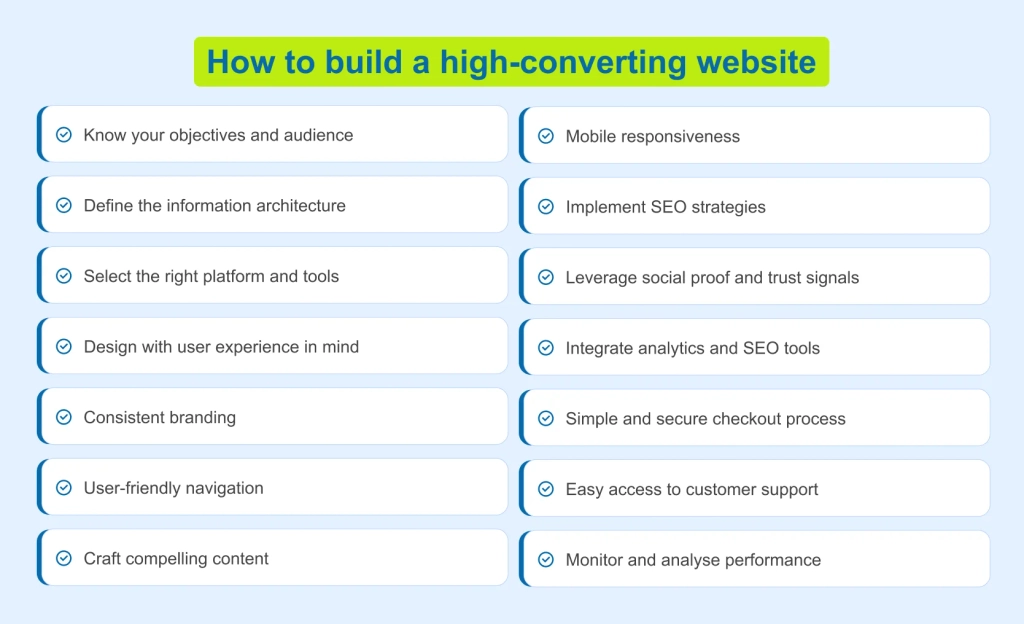
4. A Website Built to Convert: Foundation
Your moving company may get plenty of traffic, but still struggle to convert that traffic into qualified leads.
The usual culprit is friction.
Your website has one crucial job: turn a visitor into a quote request.
Many moving company websites feel like navigating through a maze: no clear service location, phone number is hard-to-find, each page takes 5+ seconds to load, the form asks too many questions, service pages are thin or vague, or there are no recent testimonials.
All of this hurts your conversion. At the end, the visitor leaves your website and finds another mover. Here’s how to stop that:
A. Make the Next-Step Obvious
When someone lands on your website after searching for a mover, don’t make them figure out what to do. Your most important conversion actions should be immediately visible, whether that’s calling for a quote, scheduling an estimate, or requesting a quote online.
While GBP gets you a first impression, your website gets you one that lasts. If a visitor needs to dig out your info, sees wrong business info, or faces trouble navigating your site, that impression will last, and you’ll lose a potential customer for good.
So, make your contact information easy to find, and use a clear click-to-call button, especially on mobile. Keep the quote form short; only ask what’s essential. Highlight your trust signals, reviews, ratings, and make sure your website loads fast on any device.
B. Answer Common Questions Before They’re Asked
A visitor lands on your website along with a number of uncertainties such as whether you serve their location, how much this is going to cost, what your previous customers say about you, or what happens when they request a quote from your business.
Your website should answer all those questions before the customer needs to ask them. For instance, your core service pages should explain what you actually do, who you serve, what the process looks like, and what the customer can expect.
A dedicated FAQ section can remove much of the friction and give the visitor a solid idea about what to expect. Each of your key pages should do the same. Remove those uncertainties, and you’ll convert far more of the traffic you already get.
C. Build Pages Around Real Buying Intent
Don’t send every visitor to your homepage, especially if you’re paying for the traffic. Rather than making your homepage do all the selling for you, the primary job of your homepage should be to introduce your business and create an impression that lasts.
If someone searches for “long-distance movers in Phoenix” or clicks an ad promising long-distance moving services, sending them to a generic homepage forces them to figure everything out themselves.
So, create dedicated pages for the services people actually hire you for. This may include services like local moving, packing services, storage-related moving services, or office/commercial relocation.
Once you connect your specific service pages with the location you actually serve, that gives search engines more relevant pages to understand and gives visitors a more focused experience. That’s why your landing page should continue the conversation that started with the search.
D. Use Proof Where Customers Make Decisions
Trust signals like social proof significantly improve conversion, but they need to appear at the right place at the right time: when the visitor is deciding whether to call your moving company.
So, rather than placing all of your social proof in the “Testimonial” page, put relevant proof close to the decision it supports. The closer the proof is to the claim, the more useful it becomes.
For instance, if you’re offering packing services, showcase your work and customer feedback. In case you’re promoting commercial moves, highlight case studies or industry recognitions/affiliations.
Rather than relying on generic marketing language like professional teams or reliable services, your website should depend on past customers describing how you arrived on time or protected their fragile content.
E. Design for Decisions Rather Than the Appearance
The sole purpose of your website is to reassure a nervous prospect about letting your crew handle their entire household. That level of trust can’t be won by appearance alone.
Your website needs to create an impression that you know what you are doing, provide quality services, and handle complaints with patience.
To do that, your website needs to be optimized around the conversion elements instead of visual aesthetics. A pop-up lead collection form may look nice, but it will fail to capture leads if you ask for too much information at the first contact.
Similarly, most local searches happen on smartphones. Your website needs to make sure that the important actions are effortless.
So, ask only what you genuinely need to start the conversation on your contact form. If needed, you can always get more information later.
Also, ensure that the website is mobile responsive with clickable phone numbers, fast loading speed, easy navigation, and easy-to-read text.
On a similar note, you should also track what happens after the click. That’ll give you a clear picture of the improvement areas within your conversion funnel. Connect your leads to your actual business revenue where possible.
KPIs like phone calls, form submissions, booked estimates/moves, and lead sources will help you determine where you can improve your website conversion tracking even further.
5. AI Search Visibility: Growth
Google isn’t the only dominant search engine anymore. Many customers start their search for movers using AI tools like Gemini, Claude, or ChatGPT. The answer often includes specific companies, services, locations, reviews, or recommendations before the customer ever visits a traditional search result.
That creates a new visibility opportunity for moving companies.
But there’s a catch: you can’t rank in AI overviews/algorithms. Here, stuffing keywords into a page or publishing hundreds of generic articles will get you nowhere.
AI engines scour the entire internet to evaluate whether your business is a credible answer to a user’s question. So, you need consistent, accurate, and trustworthy information about your business to appear throughout the internet. Here’s how to increase your chance of getting featured by those AI bassistants:
A. Make Your Business Information Easy to Understand
First things first. Your website and GBP should clearly communicate who you are, what services you offer, which communities/locations you serve, what types of moves you handle, and what makes your moving company different.
Additionally, all that information should be structured in a way that’s easy for AI-engines to access and understand.
For example, your service pages should clearly explain the service. Your location/city pages should clearly establish where you operate. Your About page should explain the business behind the website.
The same goes for your GBP and other important business listings. If your own online presence can’t clearly explain what your company does, don’t expect an AI system to confidently explain it for you.
B. Build Content Around Genuine Customer Questions
AI primarily answers conversational queries your prospect might need to research for:
- How much does it cost to hire movers in Phoenix?
- How far in advance should I book a moving company?
- Are movers worth hiring for a local move?
- What’s included in a professional moving service?
- How do I choose between two moving companies?
- What should I look for in a long-distance mover?
- Do moving companies pack furniture?
- What questions should I ask before hiring movers?
Although all of these questions aren’t directly related to your services, AI search expands the types of queries your business can appear for.
So, to potentially get cited in AI recommendations, you need to develop informational content around those questions that appear before clients decide who to hire. Useful content can put your company in front of prospects earlier in that process and help establish expertise before they’re ready to request a quote.
C. Give AI Systems Something Worth Citing
Don’t deliver generic advice that can also be found in 100 other articles. If the content doesn’t help a potential customer make a better decision, it probably doesn’t deserve to exist. Instead, add insights based on your genuine experience and expertise.
As a moving company, you have direct access to customer problems. You can turn those experiences into valuable insights.
For instance, common problems your crew encounters, moving preparation mistakes you’ve seen, local moving considerations, specific pricing factors, how your estimation process works, or examples from real jobs: you can turn all those into unique insights that’ll increase AI’s confidence in your business.
Only a mover can explain what happens when a customer underestimates the amount of furniture they have, why certain buildings require additional planning, or what makes a long-distance move different from a local one.
This firsthand knowledge is far more useful than rewriting the same generic moving tips people can easily find online.
D. Build Authority Beyond Your Own Website
We talked about entities before. AI doesn’t believe anything you claim. It collects data from the entire internet to build an authoritative entity for your moving business, and then evaluates each piece of data before citing.
AI can access your GBP, review platforms, local/industrial directory listings, local press, social platforms, and other relevant websites/sources to crosscheck your authority. This creates an important connection between your AI visibility, SEO foundation, and the rest of your marketing strategy.
For example, if your business got local mentions, but the website structure is poor, or your NAP data is inconsistent, AI engines will flag the contradiction and lose confidence in your entity.
As a result, your moving company loses visibility. Likewise, consistent business information and authentic customer reviews can make your company easier to understand across the broader web.
One thing worth mentioning: being mentioned/cited by AI-engines isn’t the same as generating revenue. If an AI tool recommends your company but the prospect never contacts you, that visibility has limited business value.
The ultimate test is the same as every other marketing channel: does it create qualified opportunities that turn into customers?
6. Google Local Services Ads (LSAs): Growth
If you want immediate leads for your moving company, Local Service Ads, aka LSAs, can be your best bet, as it puts your business in front of people actively looking for moving services.
Unlike traditional search ads, LSAs appear on Google’s local results and follow a pay-per-lead model, meaning you only pay when a real customer contacts you.
The biggest advantage of LSAs is high-intent. Someone searching for a moving company isn’t casually browsing. They usually have a specific need, a location, and often a deadline. They already acknowledge the problem and are now looking for the solution.
LSAs allow you to compete for that existing demand without waiting for your website to earn organic rankings. Here’s how to get the most out of your LSA campaigns:
A. Optimize Your Profile First
LSAs come with a “Google Verified” badge, which reinstates trust and increases lead quality. So, it’s tempting to try LSAs for getting qualified moving leads. However, you’ll need to pass Google’s license, insurance, and background checks first.
Even before that, your profile needs to be fully optimized. LSAs might set a prospect on your way, but your business information, service categories, reviews, service areas, photos, and other profile details will determine whether you’ll get the lead or not.
In other words, LSA isn’t a way to compensate for a weak reputation.
So, before you scale your marketing budget for LSAs, make sure the underlying customer-facing foundation is strong. That means accurate business data, relevant service/location pages, credible GBP, strong reviews, and fast response.
Start with a budget you can afford to evaluate properly, and monitor lead quality as well as your capacity. Don’t scale simply because the dashboard shows more leads.
B. Fix Your Conversion System
For LSAs to work as intended, you need a smooth conversion optimization process. If your business takes 3-business days for a quote request, the prospect will find another mover. Likewise, if all of your teams are booked for the next 3-months straight, buying more leads will only shrink your budget.
Since LSAs generate high-intent inquiries, they’re probably considering other movers too. So, you’ll need a process for answering incoming phone calls quickly, responding to messages, scheduling estimates, qualifying the move, and following up on time.
Remember, the conversion process has to be frictionless.
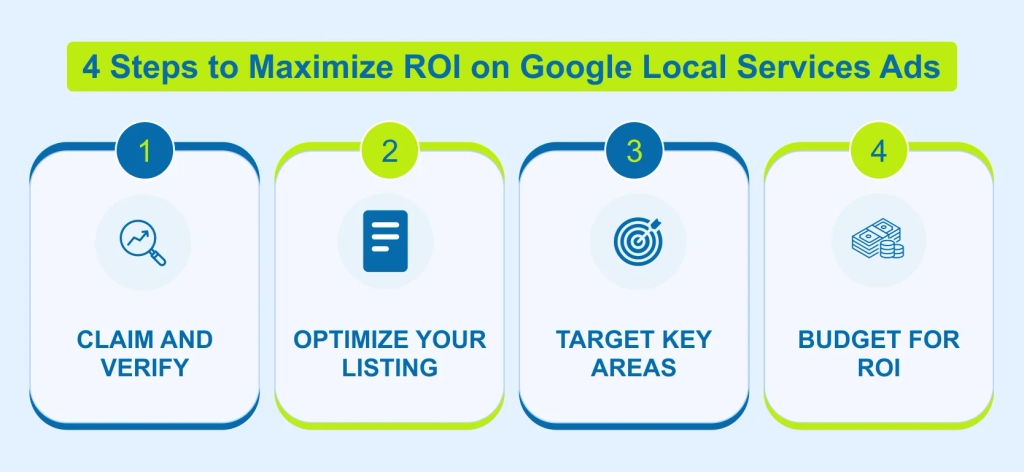
Additionally, you’ll need to consider your capacity before spending money on LSAs. Moving demand isn’t always evenly distributed. The best-case scenarios for using LSAs are during off-seasons, when you have specific service areas in mind, or when you offer high-margin services.
C. Lead Volume Vs Quality: Which to Focus on
Not every lead converts into a paying customer, and without paying customers, your business won’t grow.
So, rather than focusing on how many leads you’ve got, monitor how many of them end up converting. LSAs typically deliver warmer leads, but not all of them will convert. Here’s the lead funnel you need to track:
LSA spend >> leads >> qualified leads >> quotes >> booked moves >> revenue.
You’ll need to evaluate your cost-per-lead against your cost-per-booked move to actually know whether LSA is driving business growth or draining your budget.
Additionally, more leads won’t fix a broken conversion process. If your profile has a reputation problem, limited capacity, poor follow-up process, or slow responses, getting more leads will only strain your weak marketing funnel.
That’s why you need to fix your conversion process before you focus on the lead volume. If the majority of your collected leads end up disappearing, it’s time to reevaluate your conversion elements.
Instead of how many leads Google sends your way, the real value of LSAs will depend on how many leads you can successfully convert.
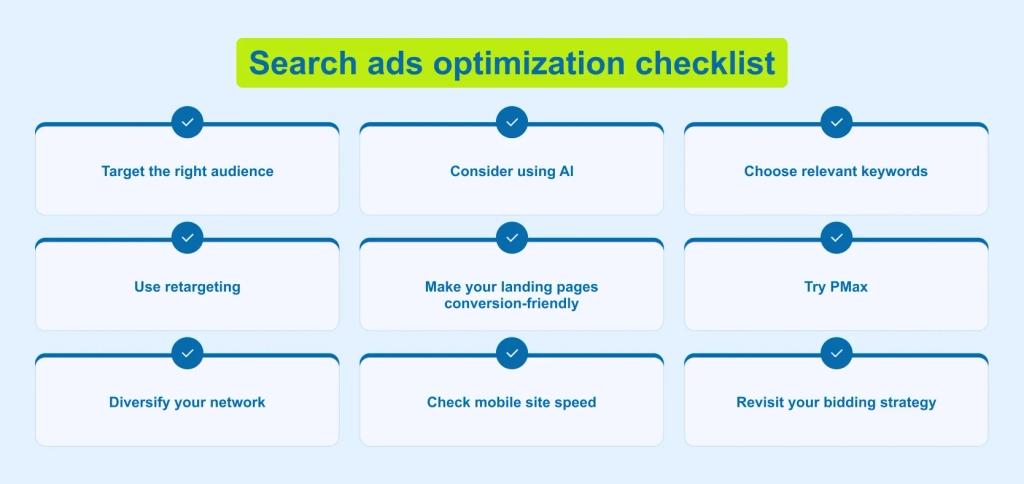
7. Google Search Ads / PPC: Situational
Commonly known as PPC (pay-per-click) campaigns, these search ads work at a broader scale than LSAs. They are way faster to set up and launch, but carry the risk of spending without tracking.
Here, you’ll need to bid on the specific search you want to show up for, geo-target your service areas, and pay for each click rather than a qualified lead.
PPC works best when your organic visibility is growing, but customers are actively searching for the service you offer. Unlike LSAs, PPC needs a dedicated landing page, ongoing keyword optimization, and active bid management strategies.
Since you pay for every single click regardless of whether the user books, your website’s copy, layout, and loading speed must be razor-sharp to turn that web traffic into actual paying moving jobs. Here’s how to make sure your PPC strategy is fruitful:
A. Target Searches That Signal Buying Intent
Not every search term is equal in value. If you’re pouring money into paid traffic, your money is better spent on search terms with buying intent, not some generic keyword with informational intent.
For instance, “Packing Services in Phoenix” and “How much packing services cost” indicate different levels of buying intent. The first one is actively searching for packing services, whereas the second one is merely researching.
If you bid on the second one, it’ll drain your daily ad spend budget on clicks from people who aren’t ready to convert just yet. To find out keywords/search terms with the highest commercial intent, you’ll need to conduct in-depth keyword research.
To protect your ad budget even further, you can leverage negative keywords to filter out irrelevant searches. There is no point paying for the clicks that came from people who aren’t looking to hire you.
B. Send Each Search to the Most Relevant Page
PPCs give you the click only; how you nurture that click into a confirmed move becomes your problem. To convert the most clicks, you’ll need to properly follow them throughout the customer journey.
For starters, you need to send each click to a highly relevant service or location page.
If the search says “commercial moving in Phoenix” and your ad talks about commercial moving, there’s no point sending that click into your homepage. Instead, the click should land on a dedicated page about commercial moving in Phoenix.
The ideal lead nurture sequence should be:
Search >> Ad >> Landing Page >> Quote Request
So, you’ll need to write your ad centering the prospect’s pain points and offer a unique solution that helps your business stand out. Then, direct that visitor to the most relevant page, and provide enough context to drive action.
C. Measure the Campaign All the Way to Revenue
Search ads like PPCs are highly specific, and you’ll need specific measurements to determine whether the campaign is providing real value or not. Just like how a campaign with a mediocre click-through rate can still be highly profitable, another campaign with impressive traffic numbers can quietly lose money.
That’s why a $4 click will not necessarily be better than a $12 click. You’ll need to measure CTR, actions, cost-per-click, close rates, ROAS, ROI, and many more KPIs to make effective business decisions.
The deeper you can trace the customer journey, the better your decisions will become.
So, set up a monitoring system that tracks every KPI, from start to finish. Compare cost-per-booked-move and ROAS against CTR and regularly review your search terms.
To sum up, PPCs work as a double-edged sword: It can accelerate your business growth and waste your marketing budget just as quickly. It works best when you have your conversion funnel leakproof and a monitoring system ready.
8. Content Marketing: Growth
Despite what many people think, content marketing isn’t limited to publishing blog posts alone.
For a moving company, content marketing refers to the process of answering the questions customers have before, during, and after they decide to hire a mover. It’s a great way to turn your professional experience into useful answers that help customers make decisions.
It includes relevant blog articles, guidelines, cost breakdowns, checklists, and even lead capture tools. If you can provide better answers to customer queries than your competitors, both your ranking and conversion will increase. It also increases your chances of getting cited by AI-engines for relevant queries.
Content marketing focuses on building familiarity and trust before the sales conversation begins. Specific content on “moving cost in Mesa” will always outperform a generic “moving tips” article.
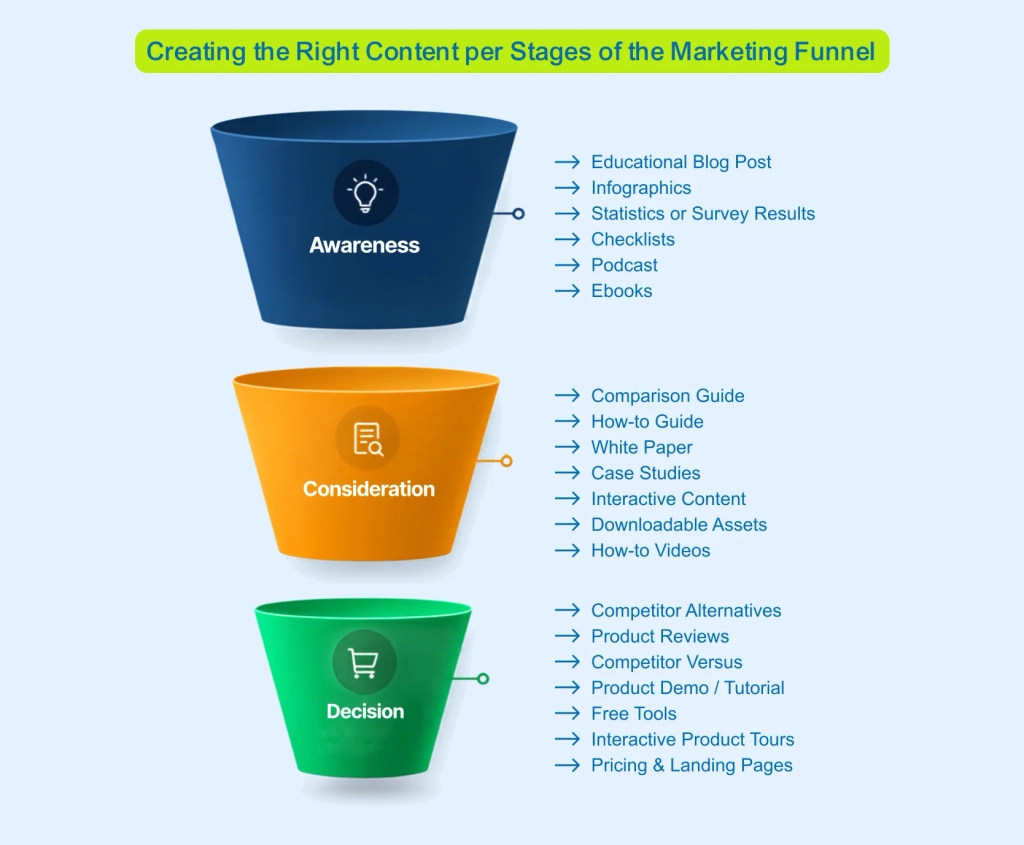
Additionally, you need to build content around the buying journey. Not everyone is ready to hire you today. Your content strategy should meet the user where they are on their customer journey, and then lead them toward relevant action.
For instance, a visitor reading about commercial relocation should have an obvious path to your commercial moving page.
Lastly, keep your content relevant, updated, and user-centric. Target real questions instead of keywords. Before publishing a single piece of content, ask:
- Does this answer a real customer question?
- Does it provide information competitors don’t?
- Does it demonstrate genuine expertise?
- Does it target a meaningful search or business problem?
- Does it naturally connect to one of our services?
- Is there a clear next step for someone who wants help?
Don’t just publish for the sake of publishing. Deliver real-life value or solve customer pain points with each piece of content, and monitor regularly. Repurpose your content where possible and make sure that your foundation supports the growth that comes with content marketing.
9. Email Marketing: Growth
Email marketing is one of the most cost-effective marketing channels you can use. A properly set up email campaign can help you nurture leads, connect with your past customers, ask for reviews, or generate word-of-mouth marketing almost effortlessly.
Email works best with the prospects who have contacted your business at some point: past customers, people who requested quotes, property managers, real estate agents, or corporate contacts.
The key to a successful email campaign depends on two things: how well you segment your leads, and how specific your message is for each segment. Building a newsletter nobody wants will also help nobody.
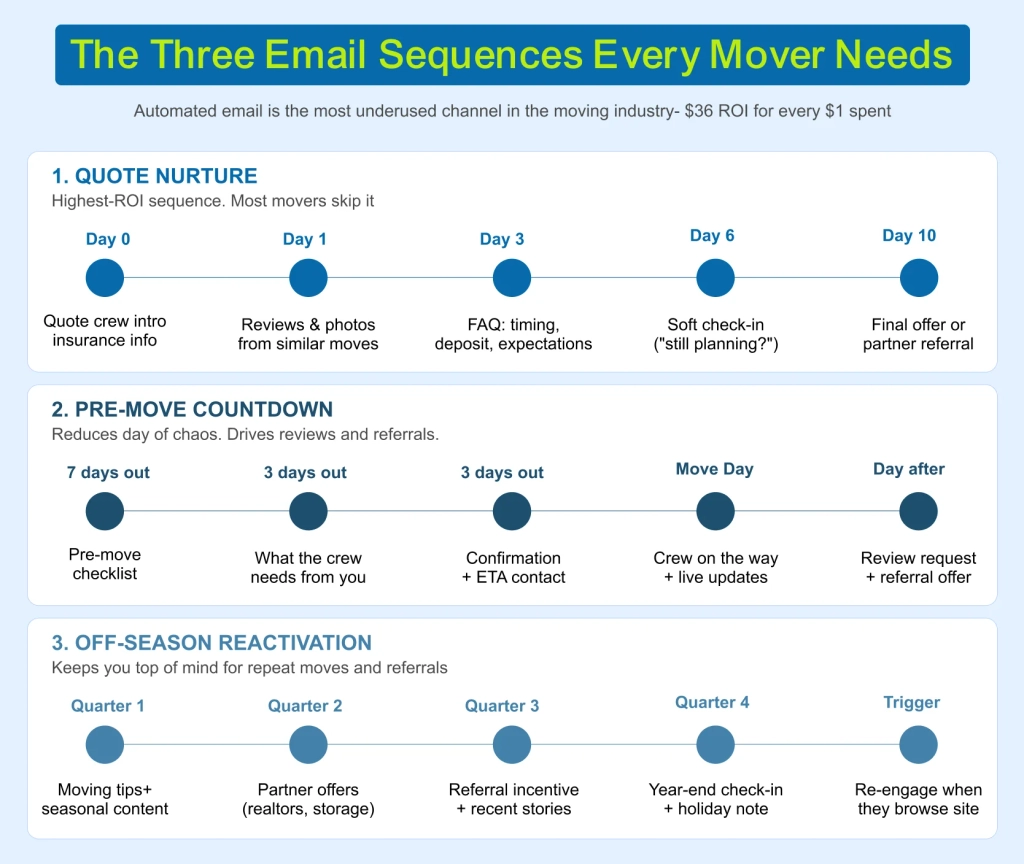
For the best results, segment your audience based on where they are in the relationship, develop a unique email sequence for each segment, and automate timely follow-up without sounding too promotional.
The whole point of email marketing is to keep the buying conversation alive and reduce confusion where needed. You already have the email list. All you need is a structured email marketing system.
10. SMS Marketing and Speed-to-Lead: Foundation
Moving leads can go cold surprisingly fast. They usually compare multiple movers before choosing one. That’s why speed-to-lead is so important in moving business.
SMS gives you a way around since text messaging is usually your fastest path to a customer. Text messages have a 98% opening rate compared to 20% for emails. Simple, automated text messages can assure the prospect who just asked for a quote, as well as give your team time to properly follow up.
However, SMS isn’t only for newly acquired leads. Once the lead is inside your funnel (with consent), you can strengthen many parts of your customer journey with SMS. That includes appointment reminders, arrival updates, lead follow-ups, review requests, and many more.
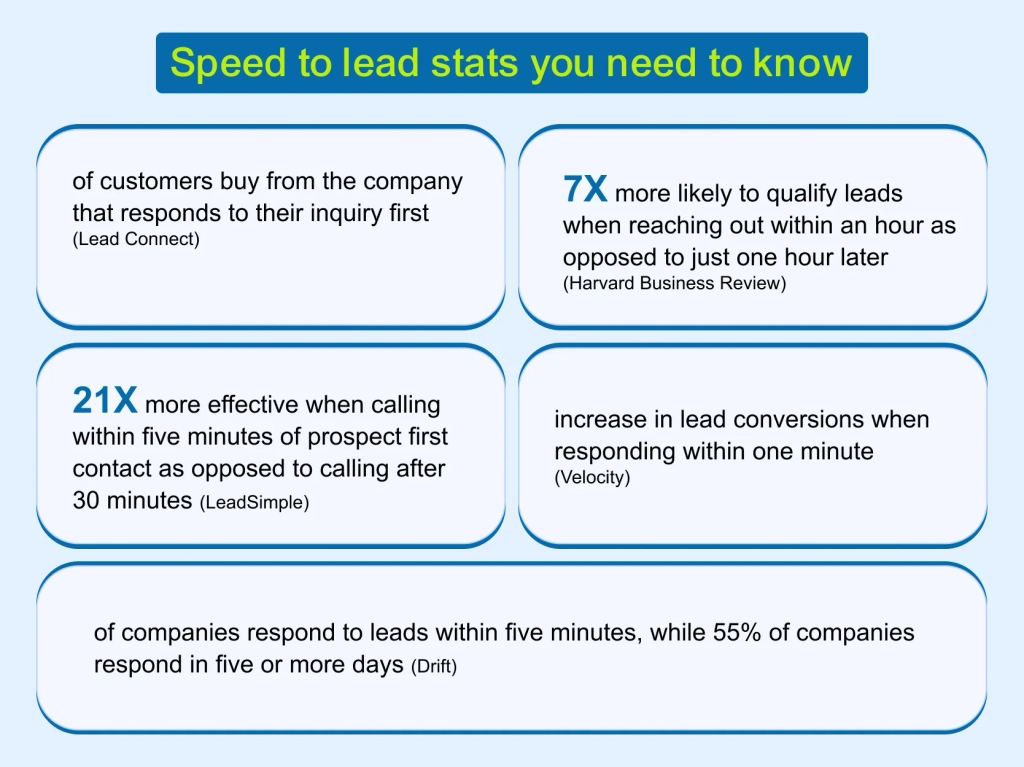
Also, back up your text marketing with fast human interaction. A 98% SMS delivery rate doesn’t mean much if nobody follows up with the customer. Once you have strengthened the underlying foundation, you can use technology to make that process faster and more consistent.
Remember, you’re not trying to recreate your email newsletter in a text message. The best messages are usually short and useful. Use automation to start the conversation, then let your team take over as soon as possible. And always give people a clear way to stop receiving marketing messages.
11. Video Marketing: Growth
Video is another incredible way to build trust, especially for a moving company. A well-made video can show what a website claim can’t. Video acts as the evidence for all of your claims and makes the experience of hiring you easier to picture.
For instance, “We’re professional” is just a claim, whereas a video showcasing your uniformed crew at work, trucks with your logo, or your company intro will work as evidence. However, avoid turning every video into promotional content.
You don’t need cinematic production. A 30-second clip from an actual job can communicate more than a paragraph filled with adjectives. People search for authenticity rather than perfection.
You can also use video testimonials from your clients as social proof. Instead of handing them a script full of marketing jargon, ask them to simply explain the experience in their own words, with specifics.
Video works particularly well for small businesses as you can easily repurpose one single video into multiple content formats. Also, rather than chasing views, put your videos where customers make decisions.
12. Organic Social Media: Situational
Social media isn’t your primary lead generation source. Use it to keep your business on top of your customers’ minds. Instead of trying to be on every social channel, build your presence where your customers and referral partners hang out. Nextdoor is especially strong for movers.
Make sure your social media has enough trust signals to convince prospects who came here to check you out. They’re looking for signs that your company is active, professional, and actually does the work.
So, upload posts showcasing your moving crew at work, before-and-after setups, team members, community involvement, and behind-the-scenes moments as proof. Avoid being salesy on every post. Instead, create hyperlocalized content that people might genuinely find useful.
Also, make your business appear as a human. Introduce crew members, share milestones, celebrate anniversaries: all of these will help your brand feel less anonymous and more relatable.
Social media becomes most useful when you track business outcomes rather than chasing followers.
13. Paid Social and Retargeting: Situational
Paid social traffic is tricky since they don’t share the same high-intent as Google searches. Paid ads on social media usually target people who are higher in the conversion funnel: planning to move soon, but not at this moment.
That makes paid social media more useful in creating demand, staying top-of-mind, and recovering abandoned leads. So, rather than trying to win attention from a cold audience, you need to give them a reason to stop scrolling.
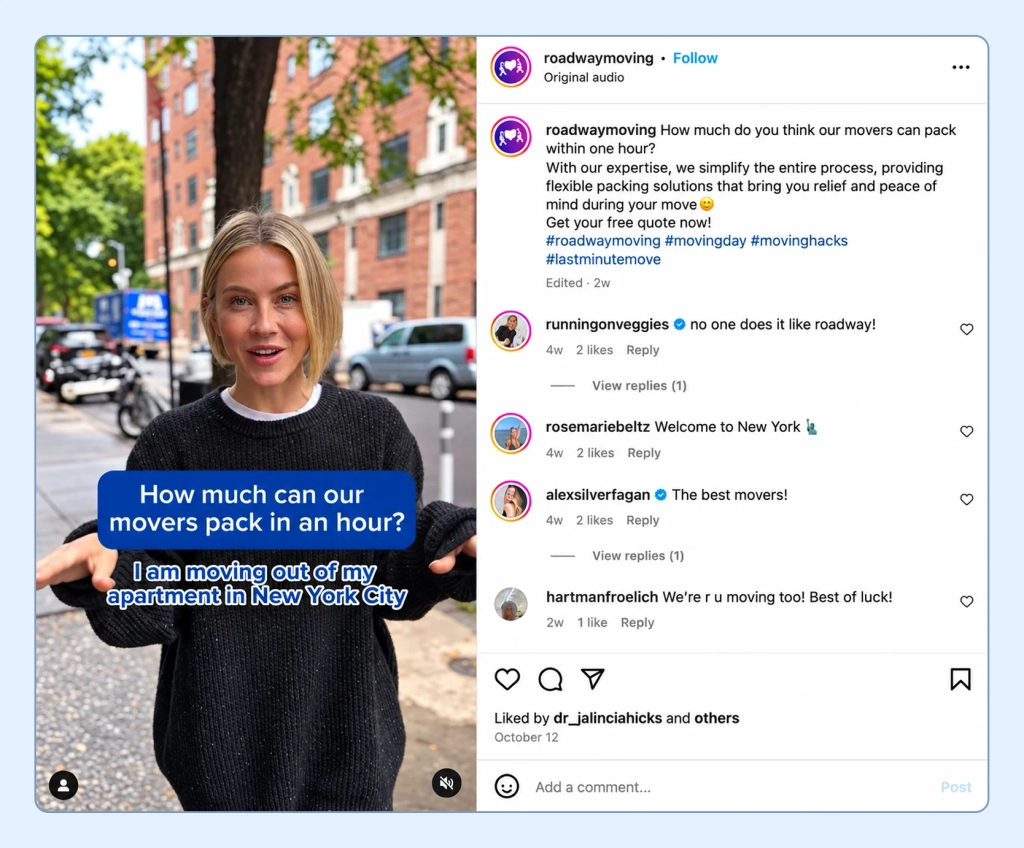
User-generated content (UGC) works well here. A simple moving cost calculator, a seasonal moving guide, a short video showing moving-day mistakes, or a before-after story grabs attention better than plain promotional content. Amplify content that is already doing well organically.
Additionally, use retargeting to reach people who visited your site but didn’t request a quote. For that, you need to make your messages personalized and relevant. A person who visited your residential moving services page shouldn’t see ads for corporate relocation.
14. Online Directories and Lead Marketplaces: Situational
Not all of your leads have to come from Google. Online directories and lead marketplaces like Yelp, Angi, HireAHelper, or Thumbtack can also be good sources for qualified leads since they put your moving company in front of people who are already comparing service providers.
Directories increase your local presence while marketplaces sell leads to you and other movers. Those leads may turn into booked moves, but you’ll need to compete with other movers about pricing or control.
So, use directories to build consistent, accurate citations and marketplaces to test demand. Marketplaces are okay when you need leads fast, can track everything, and don’t mind the competition, but don’t make them your entire marketing strategy.
Use third-party lead sources only when the economics make sense and focus on building channels that you own.
Offline Marketing Strategies for Moving Companies
Unlike many other service businesses, moving companies enjoy a few added bonuses when it comes to offline marketing.
For starters, your marketing travels with you: each one of your trucks is a moving billboard, each job puts your crew in the neighborhood, and every completed project creates a referral marketing opportunity.
That being said, not every offline marketing strategy will guarantee you leads. Some of them will create awareness, some of them will create referrals, and some will make your brand more recognizable: all of which will eventually drive your booked revenue per lead.
One thing worth mentioning here: there is no universal “best offline marketing strategy” for moving businesses. Your ideal strategy will depend on your business goal, community partnerships, and customer touchpoints.
Let’s explore the offline marketing strategies you can use to build a robust local presence, generate consistent leads, and turn every move into a long-term branding opportunity.
1. Truck Wraps and Fleet Branding: Foundation
Your moving truck wrapped with your name and logo works as a moving billboard that you paid for once, travelling through the exact market you’re trying to reach. A well-branded fleet can turn everyday moves, supply runs, and time spent in traffic into repeated exposure for your company.
However, putting your logo on your truck isn’t the same as creating useful local advertising. So, you need to make your fleet recognizable from a distance. Since people will usually see your truck for a few seconds only, you don’t need to wrap your fleet with your entire service list.
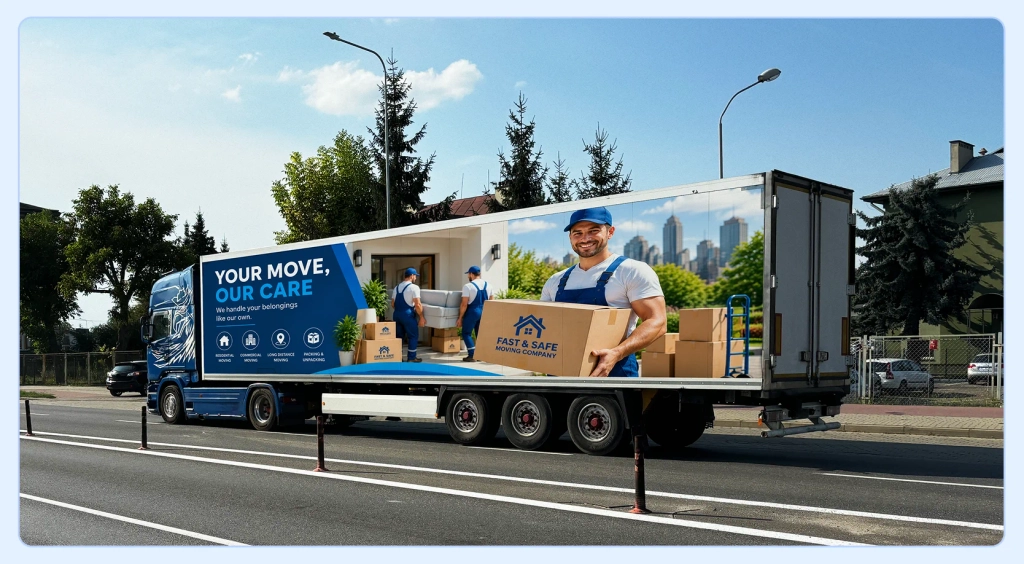
Instead, put your most important information first: your logo, name, phone number, and website. Use large, readable typography and strong contrast. If possible, add a simple service message or a large QR code for a better impression and accessibility.
Also, maintain a consistent visual identity across your fleet and customer touchpoints. The goal here is to turn repeated exposure into familiarity. Invest in a professional wrap since a cheap one signals a cheap operation.
2. Yard and Lawn Signs at Job Sites: Foundation
Branded Yard and lawn signs are another great way to grab local attention. This allows you to put your brand in front of people in the same local market while your service is visibly happening. It’s one of the cheapest, most effective offline tactics you can use.
A simple and straightforward lawn/yard sign acts as both social proof and local advertising. Add your company logo, name, contact info, and a short message like “Now serving your neighborhood”. People will see the sign and immediately connect your service to their local experience.
Even better if you offer a little promotion like “Mention this sign when requesting a quote.” This allows you to measure whether the signage is generating inquiries.
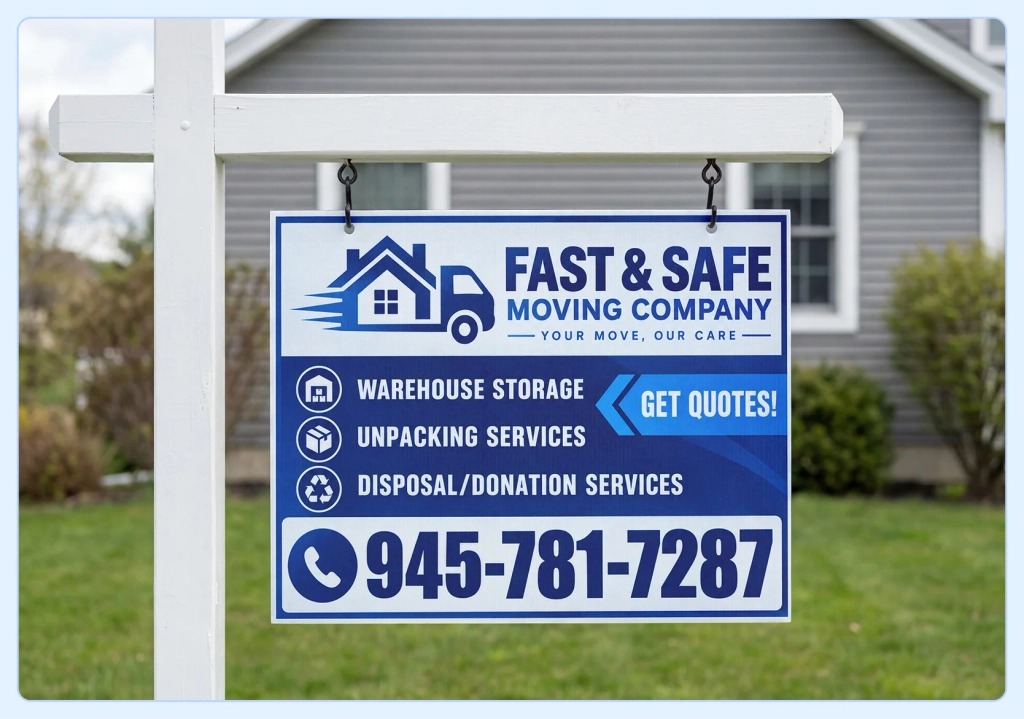
However, don’t forget to ask the customer’s permission first. If the homeowner gets annoyed, your referral opportunity dies. Also, focus on the locations where future moving demand is likely to be strongest.
3. On-Site Professionalism: Foundation
Your customers don’t experience your brand through your logo alone; they experience it through the people who show up at their door. That’s why on-site professionalism is part of marketing.
This mainly includes a proper uniform, clean vehicles, and sincere communication. On the move day, the customer will watch how your team looks and acts, and those impressions will drive the reviews and referrals that follow.
For a moving company, every job is both a service delivery and a live demonstration of the brand. A professional appearance, clean trucks, and courteous communication will reinforce the customer’s trust in choosing you.
Remember, marketing is a promise your operations need to deliver the proof of. If your customer experience consistently lives up to the promise, every completed move can strengthen your marketing through reviews, referrals, word of mouth, photos, and repeat recognition.
4. Structured Referral Programs: Foundation
Most moving companies treat referrals as something that happens naturally. The better approach is to build a system around them.
Structured referral programs turn people and businesses that already interact with movers into repeat sources of qualified leads. The key is to make the partnership easy to understand, easy to act on, and worth maintaining for both sides. Here’s how to do it:
A. Customer Referral Program
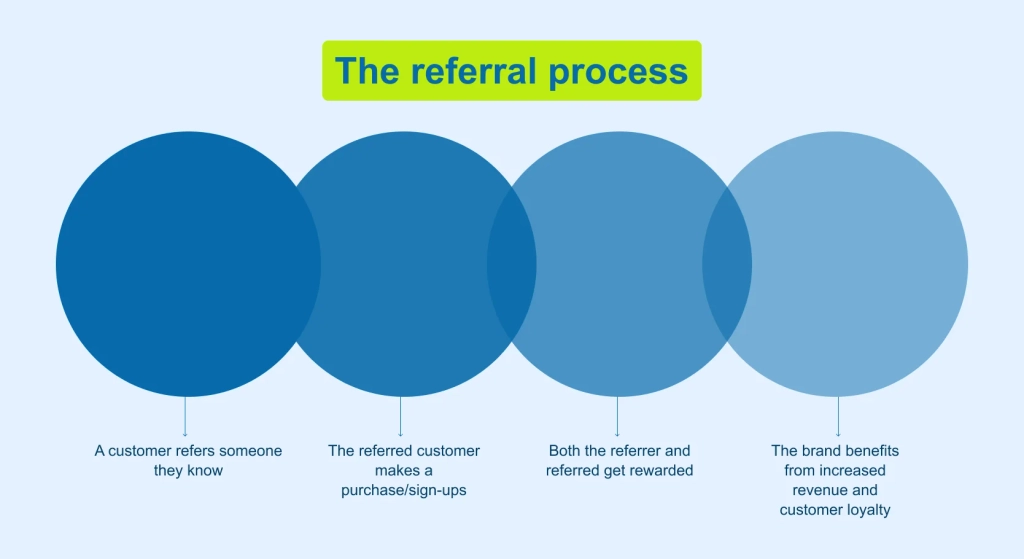
Being satisfied with your service doesn’t guarantee a referral. Most customers won’t spontaneously remember to recommend your company months later. You need a structured referral program to turn your happy customers into a steady lead source.
So, provide impeccable service, ask at the right time, and make forwarding your contact info easy. The less work it takes, the more likely customers are to actually do it. You also need to give people a reason to participate in your referral program.
However, before you launch your referral program, verify any legal, tax, contractual, or industry-specific requirements that apply to your market. Set clear incentives that are worth sharing and don’t confuse people.
Also, track where each referral came from all the way to completed moves so you know which customers and partners are actually sending business.
B. Real Estate Agent Partnerships
Real estate partnerships are particularly valuable since they regularly meet people at the time they need moving services. One solid agent relationship can send you dozens of jobs a year.
However, real estate agents don’t need another business card. They need a mover they can confidently recommend without worrying that the referral will come back to hurt their reputation.
So, make the agent’s job easier. With their professional reputation on the line, they’ll value a reliable partner over a 10% discount. Create a referral experience specifically for agents: Clearly state the referral fee, help them look good to their clients, and keep the connection alive.
Focus on developing the relationship first. Rather than collecting and distributing business cards all day, building long-term relationships with a handful of high-fit agents will benefit you more.
C. Property Manager Partnerships
Property managers and apartment complexes regularly deal with a lot of moves, making them a potentially valuable source of recurring moving business.
A single homeowner may refer one or two people, but well-run apartment partnerships can potentially expose your company to hundreds of residents over time.
But there’s a difference between dropping off flyers at a leasing office and becoming a moving resource the property team actually trusts. Your job is to become visible at the points where the property team already knows a move is happening.
Solve a problem for the property team, and you’ll become the mover they name by default. The relationship becomes stronger when the property team sees you as a reliable resource rather than just another vendor asking for leads.
D. Storage Facility Partnerships
Someone renting a storage unit may not need a mover today, but the storage facility often sits close to a moving event. If you become the moving resource their customers can rely on, you’ll get a consistent stream of referrals.
For example, someone who just rented a storage unit may eventually need help getting furniture into it. If you develop a strong partnership with the storage manager, they’ll mention your business when customers ask about moving services.
Target storage facilities that fit your business and build a two-way relationship. The goal is to become useful enough that the facility remembers you when a customer needs transportation.
E. Corporate, HR, and Relocation Partnerships
Since office relocations, warehouse moves, and corporate transfers happen year-round, commercial moving can be a great lead source, especially when your business gets slow during the off-season.
However, there are usually several people involved in a corporate relocation: HR managers, executive assistants, office managers, and relocation coordinators. You’ll need to approach them separately.
So, build a corporate-ready process, prioritize operational consistency above anything else, make the handoff easier, and approach companies with recurring relocation needs. Don’t chase these partnerships until your operations can support them.
Remember, a single corporate contract can be worth dozens of potential jobs, provided you deliver reliable moving services and become their go-to mover.
F. Senior Living and Downsizing Partnership
Once you’ve developed a basic referral network, you can expand it by tapping into specialized services like downsizing or senior moving services. Senior move managers, assisted-living communities, and estate professionals regularly need movers they can trust with careful, patient service.
However, this type of work needs a slower and gentler approach. Rather than focusing on fast services, you’ll need to prioritize patience, respect, clear communication, and careful handling since it’s a physically and emotionally complicated transition.
Set your marketing goal to help your partners serve their customer better: a helpful relocation guide, a niche moving checklist, a downsizing guideline, or a family coordination manual to position your brand as the helping hand that delivers reliable service.
G. Networking and Referral Groups
Lastly, Local networking and referral groups can generate moving leads without ads, but there’s an even bigger opportunity: to build a local network of professionals who regularly encounter people preparing to move.
Here, you’ll find real estate agents, mortgage professionals, insurance agents, contractors, estate planners, property managers, organizers, and other businesses that serve homeowners.
However, not every networking group deserves your time. Collecting 100 business cards doesn’t create a referral network. So, look for groups where members naturally interact with your target customers.
Also, referral networks work when value moves in both directions. So, don’t become the person who only takes. Find out ways you can help them first, and build a reliable partnership.
Show up consistently, become specific about who you help, maintain good communication, measure your return on investment, and become the reliable mover people feel safe recommending.
5. Direct Mail Campaign: Growth
Direct mail may look outdated next to Google Ads, social media, and AI search, but they still work for moving companies. It puts your offer directly in front of a highly specific local audience.
Instead of paying to reach everyone online, direct mail lets you put a physical offer in front of a targeted group or people from a high-turnover neighborhood.
However, to get the most out of it, you’ll need to make it personal and easy to track. Rather than focusing on maximum distribution, try to gain maximum relevance. Choosing the right time and message is also important as you’re choosing a highly specific audience.
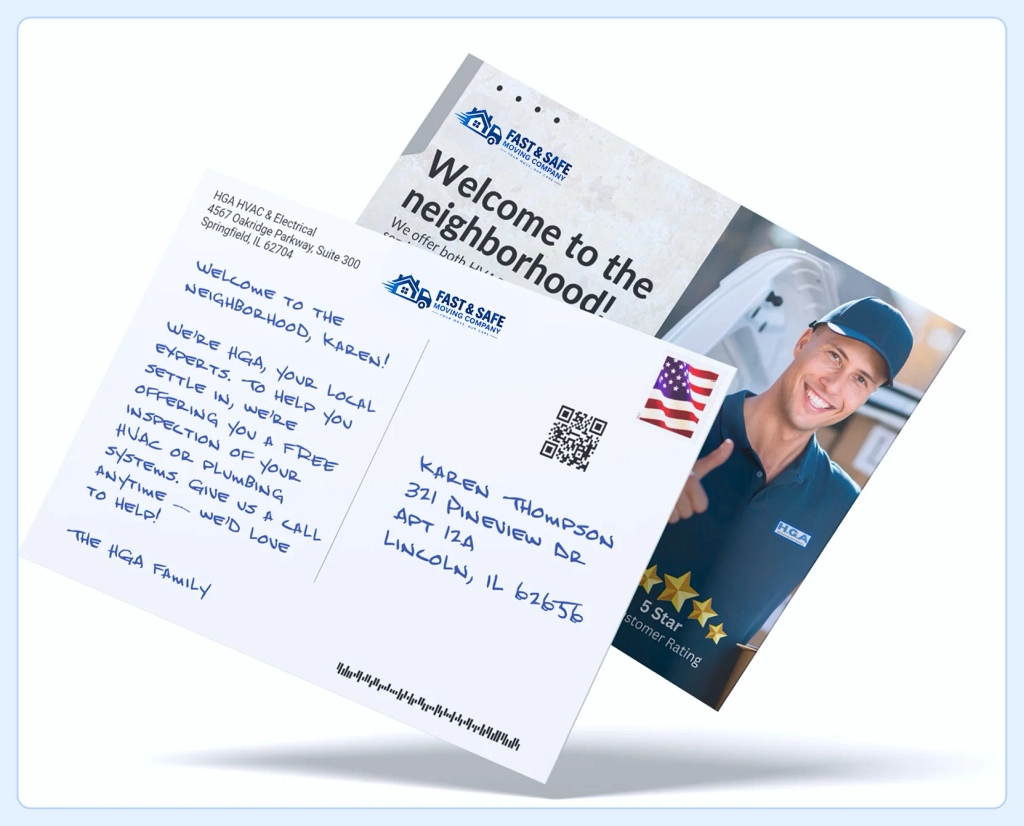
Evaluate your completed jobs and identify the neighborhood your most valuable jobs came from, and let that target guide your direct mail campaign. Also, track and measure each campaign to optimize the next one.
Direct mail campaigns work best when you pair them with your digital presence, giving people one obvious next step. So, let your direct mail become the trigger, and your digital presence guide it.
6. Door Hangers and Flyers: Situational
These are cheap, hyper-local, and easy to deploy around the neighborhoods where you’re already working, but this tactic is highly dependent on location, timing, and execution.
Be as specific as possible with your messaging. The message should feel relevant without pretending you know the homeowner’s plans. Keep the design simple: one offer, your number, one CTA, and your reviews.
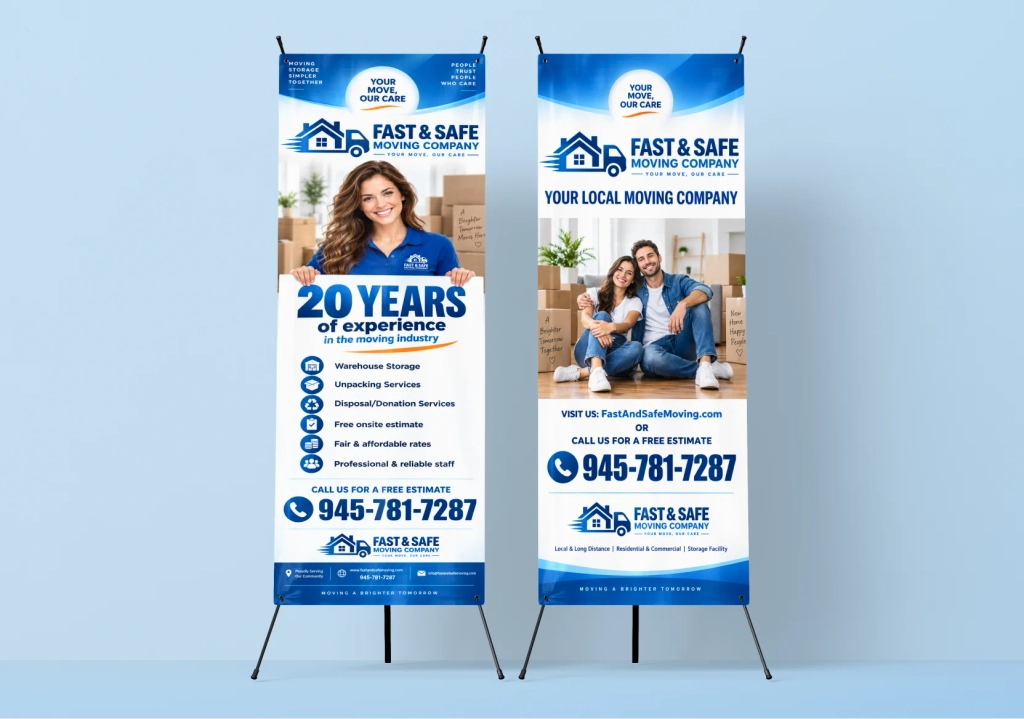
Check the local law first, as door-to-door distribution isn’t universally permitted. Never leave materials somewhere they’re likely to create litter or annoy residents. Also, don’t assume every neighborhood follows the same pattern.
Door hangers and flyers work best when they’re attached to a real local opportunity rather than scattered randomly. Start around neighborhoods where you’re already completing profitable moves, and test the outcome for every region.
7. Community & Local Events: Situational
Another great way to reach potential lead sources is to attend local networking events like charities, local expos, trade shows, and sponsorship functions. Local sponsorships and charity work build goodwill and put your brand in front of the community.
For instance, sponsoring a youth sports team, running a donation drive, or handling a free move for a local charity earns real word of mouth and often some press. People remember the mover who showed up for the neighborhood.
Similarly, local expos, festivals and trade shows put your business in front of people who already have a reason to move. You can create a good impression by offering giveaways or free moving tips. This won’t instantly bring you leads, but it’ll compound over time to increase your familiarity.
However, being only seen isn’t enough. You need to become memorable. The goal here is to create a positive interaction people can associate with your company. That’s why you’ll need to contribute something useful and follow up quickly later.
Also, choose recurring relationships over one-off sponsorships. This gives your brand more repeated exposure than a single logo placement. You don’t need to chase every event. Start with the one closest to your target audience.
8. Local Print Advertising: Situational
Local print advertising can still make sense for a moving company, but only when the publication reaches the right local audience. It’s not one of the immediately profitable channels. Rather, it supports your other channels by increasing your local relevance.
Neighborhood magazines, community publications, church newsletters, or coupon mailers can deliver steady, low-cost local exposure, especially with older homeowners.
You don’t need everyone in the city to know your moving company’s name. It’s a visibility game. So, aim to stay visible among the people most likely to need moving services.
Also, connect the ad to a focused quote experience. Keep the messaging different from your digital ads and add social proof to reduce uncertainty.
Highlight claims that can answer the customer’s biggest concerns. Start small, and measure everything you can.
9. Radio, Local Podcasts, and Audio: Situational
Radio and local podcasts can put a moving company in front of a large local audience when the timing is right, but audience fit matters more than the volume here.
Don’t expect every listener to start asking for moving quotes overnight. This type of audio advertising works best when you’re using it to build local familiarity rather than expecting immediate results.
Instead of listing all of your services within 30 seconds, focus on giving people one thing they’ll remember. You can also pair your campaign with seasonal offers.
Additionally, give people an easy way to reach you. Rather than focusing on your service, focus on your expertise and how it can solve customer problems. Since audio is primarily used to amplify awareness, try to pair it with something you can actually track.
10. Billboards, Transit, and Bench Ads: Situational
Out-of-home advertising like billboards, transit, and bench ads builds high-frequency local awareness. A well-placed billboard, bus ad, or bench can make your company feel like a familiar local business rather than an unknown mover someone just discovered on Google.
However, most people will drive past your ad within seconds. So, your message needs to be understood almost instantly. Keep the message as simple as you can, make your brand recognizable, and incorporate your fleet into the campaign.
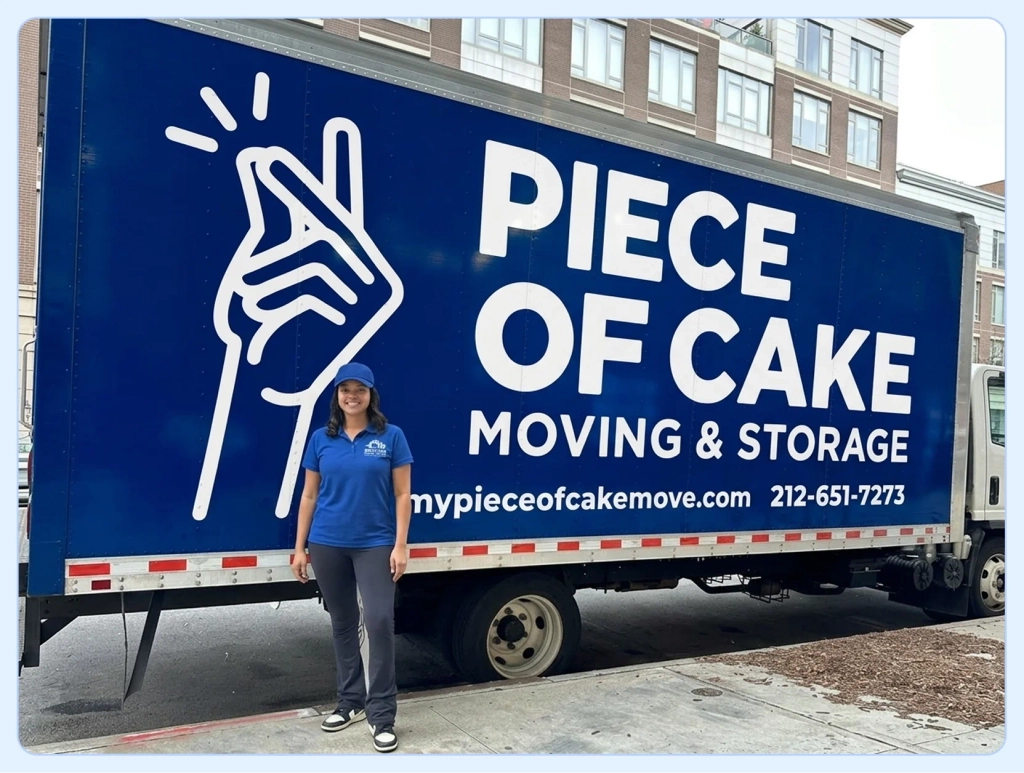
Placement is super important here. Choose locations based on where profitable customers actually live and travel. Test one market thoroughly before expanding. You need to balance your visibility with produced business.
Remember, this is not a stand-alone lead source. It’s a lead nurturing channel that supports every other lead source you have.
11. Branded Merchandise and Moving Supplies: Situational
Branded T-shirts, boxes, tape, markers, reusable bags, and other moving supplies can become small reminders of your company. The key here is to brand something useful rather than 5,000 cheap promotional products nobody will use.
Give customers something worth keeping. They’re the ones that stay useful long enough for the brand to be remembered. Turn your supplies into part of the customer experience.
Branded merchandise also includes what your employees wear. Clean, consistent uniforms can make every moving crew a visible representation of the company.
Remember, good branding solves a practical problem while reinforcing the company behind it. It won’t replace your lead-generation channels, but it can make your company easier to remember when the next move comes around.
Which Strategies to Choose for your Moving Company
Not all marketing strategies are the same. The right fit for your business will largely depend on your growth stage, business plans, budget, services, and locality. But here’s the simplified version:
Start with the foundation that captures active searchers, then layer on growth channels as you have budget and time. Finally, experiment with situational channels that make sense for your specific market, budget, and moving company growth goals.
Here’s how that prioritization changes depending on the type of moving company you operate:
If You’re a New Moving Company
Don’t start by trying to look like a national brand. Your first job is to become easy to find, easy to trust, and easy to contact locally.
Prioritize:
- Google Business Profile
- Reviews and reputation
- Conversion-focused website
- Local SEO and core city/service pages
- SMS and speed-to-lead
- Building a referral network
- Yard signs and branded trucks
This way, your first customers also become your first marketing assets. Every completed move can potentially produce a review, referral, photo, case study, repeat customer, or neighborhood introduction.
Don’t rush into expensive awareness campaigns before you’ve built that foundation. Rather than focusing on scaling, you should focus on building credibility.
If You’re an Established Mover, but Need More Growth
For an established mover, finding the leak inside their conversion funnel is more important than adding new marketing channels to the mix.
Start by looking at:
- Local + Organic visibility
- Google Map Pack performance
- Website conversion rate
- Review volume and recency
- Missed calls
- Response time
- Quote-to-booking rate
- Referral volume
- Service-area coverage
For instance, if you’re getting plenty of website traffic but no leads, buying more traffic won’t solve the underlying problem. If you’re generating calls but missing them, more advertising will only drain your budget. Likewise, if you’re ranking well but have weak reviews, reputation may be limiting your conversion.
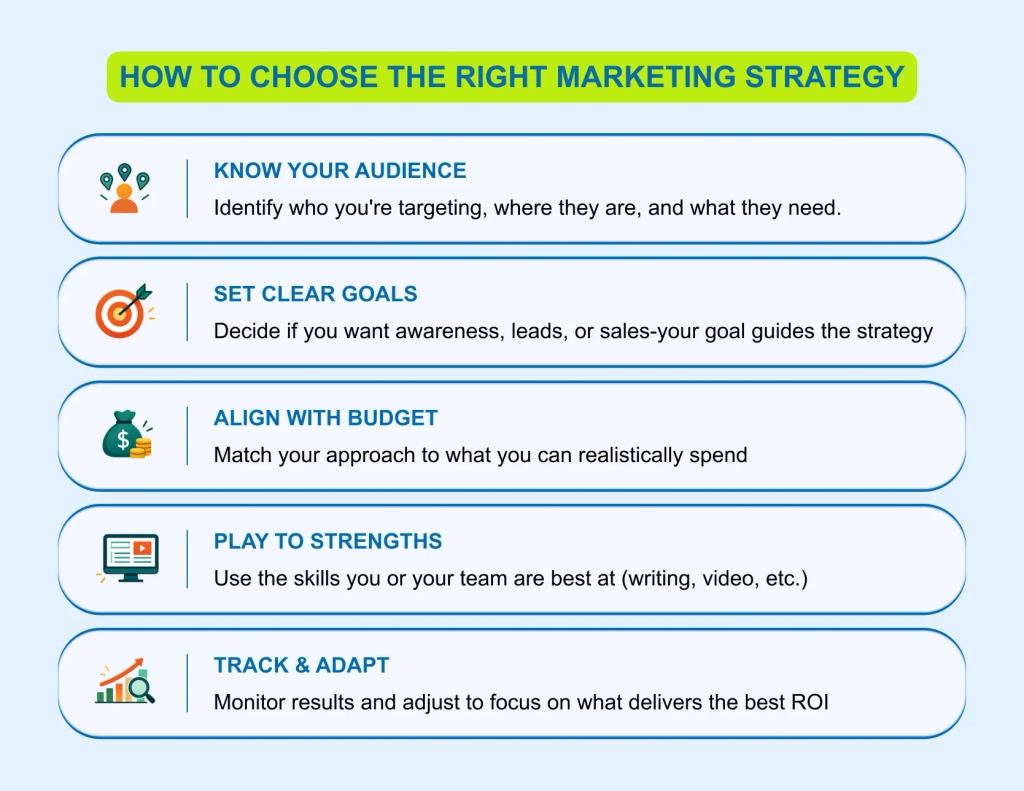
Once everything is solid, you can layer the growth channels:
- Targeted PPC or LSA campaigns
- Realtor and property manager partnerships
- AI search visibility
- Targeted direct mail campaign
- Content marketing
If You Dominate Local SEO but Want to Expand
Once your organic visibility is strong, the next opportunity is usually diversification.
Consider optimizing:
- Local Services Ads
- Google Search Ads
- AI/generative search visibility
- Content marketing
- Video marketing
- Email marketing
- Strategic partnerships
- Corporate relocation
- Property manager relationships
- Senior-living partnerships
Also, test situational channels like billboards, radio, and expos for broad awareness. At this stage, your primary goal is to reduce your dependence on a single acquisition source.
If Your Budget is Limited
Don’t spread $2,000 across ten channels. Instead, choose one or two priorities based on where your biggest limitation exists.
The standard growth structure looks like this:
Foundation >> demand capture >> referrals >> partnerships >> experimentation
There is no universal marketing stack. The right channel is the one that solves your current constraint at an acceptable cost. Start with the bottleneck closest to revenue, fix it, measure the result, and only then add another layer.
To help you visualize better, here’s a quick decision framework you can start using today:
Moving Marketing Mistakes that Drain Your Budget
For a moving brand, the waste is usually harder to spot. For instance, if you buy leads without proper tracking, you won’t know which ones are earning you money and which ones are costing you. That’s why the fastest way to improve your marketing is to find out and stop the leaks.
Here are the mistakes you should watch out for:
- Don’t try every marketing channel at once: Build the foundation first, and then add one channel at a time.
- Fix your conversion funnel before buying traffic: Traffic only becomes valuable once you give it somewhere useful to go.
- Don’t ignore missed calls: If you’re paying to generate phone calls, answering those calls is part of your marketing budget.
- Stop sending every customer to the homepage: The closer the page matches the customer’s problem, the more they are likely to convert.
- Don’t use thin, templated city pages: Adding 50 nearly identical pages with different city names is considered doorway spam and can kill your ranking.
- Prioritize performance over chasing vanity metrics: Impressions and follower count won’t pay your bills. Focus on the metrics that do.
- Don’t buy leads without measuring their profitability: If you don’t know your cost per booked move by source, you’re guessing.
- Scale your operations before marketing: Additional leads won’t help you if your crew is too busy with your existing ones.
- Don’t ignore AI: AI search is rising. If you don’t optimize for AI generated answers, you’ll lose before the race even begins.
Is Your Marketing Actually Working: How to Find Out
Most marketing waste doesn’t look like waste. It looks like traffic, leads, impressions, campaigns, and activity. Look one step further. Don’t expect perfect attribution. Your goal is to get enough data to remove guesswork from your business decisions.
Start with the number closest to revenue. For a moving company, that’s the cost per booked move, aka customer acquisition cost (CAC). Track each lead back to its source. Then, measure cost per lead, contact rate, lead-to-customer rate, and finally what it costs you to book an actual job through that specific channel.
Also, measure each marketing channel separately. For each channel, list leads generated, leads you actually reached, jobs booked, dollars spent, and cost per booked move. After each quarter, double down on the channels producing profitable moves and cut the ones that only produce activity.
Follow the customer from first interaction to booked move and eventually to profit. Record everything and evaluate periodically to identify improvement areas. Also, compare acquisition cost with the profit each type of move actually generates.
When you know which channels produce qualified customers, how quickly you convert them, what they are worth, and what it costs to acquire them, your marketing performance becomes much more targeted and impactful.
When to DIY or Hire a Moving Company Marketing Agency
DIY marketing can work extremely well for a small moving company, especially when the owner has time, understands the local market, and is willing to learn. An agency makes sense when the company has enough revenue to invest, a clear growth target, and more marketing work than the team can realistically handle.
For most moving companies, a hybrid approach works better: you handle the highest-impact marketing activities and hire a specialist for the technical aspects. Don’t outsource knowledge that only your business can provide.
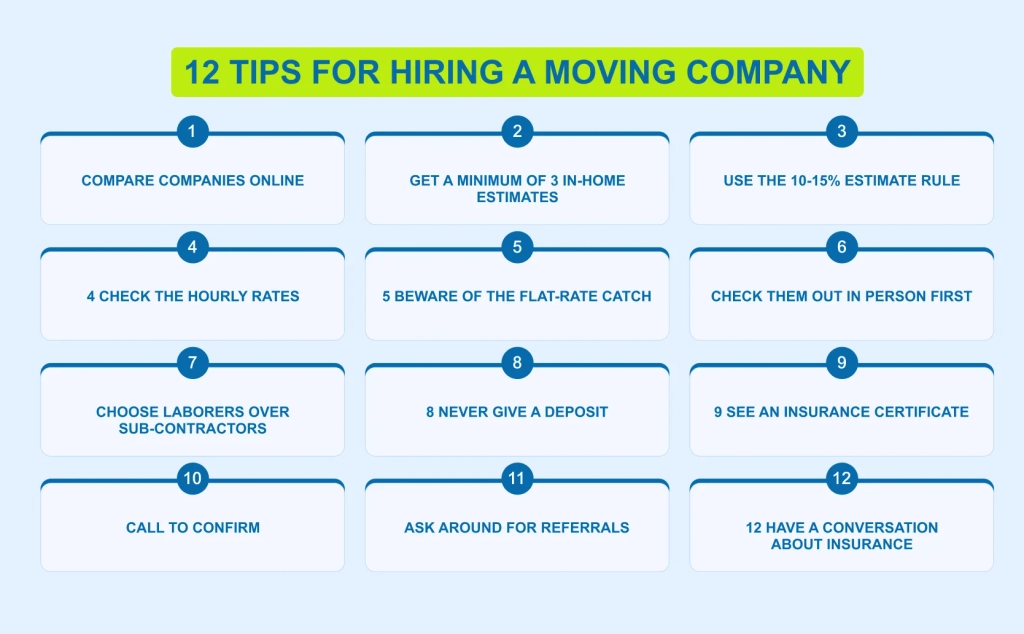
Here’s a simple decision framework that can help you choose better:
If you really need to hire an agency, make sure you’ve defined the problem and the business outcome you want first. Also, evaluate the agency thoroughly before hiring. Hire an agency when you have a clear growth objective they can realistically help achieve. The right agency will pay for itself in booked moves.
Be careful with agencies that promise rankings or lead volume. A credible agency should be willing to explain uncertainty rather than pretending it doesn’t exist. Remember, a strong agency should be able to diagnose your business before prescribing tactics.
Final Words: Stop Chasing Leads, Start Booking Moves
No matter which marketing channel you use, the principle stays the same: be visible, credible, and easy to contact. Respond quickly, deliver a great experience, and give customers a reason to recommend you.
Start with the foundation and add more growth channels only when your business justifies it. The same goes for offline marketing: experiment with offline advertising when your market, budget, and economics support it.
Use paid search when you need to capture existing demand. Build partnerships when referrals could become a stronger acquisition engine. Invest in content and AI search visibility when you’re building long-term organic reach.
However, don’t confuse activity with progress. Getting a thousand new visitors or followers won’t matter much if they don’t convert. Follow the customer all the way to the booked job, and you’ll find the leak that’s costing your moving company leads.
Need professional help optimizing your marketing strategy?
Feel free to reach out and claim your free audit. Our niche specialists will help you identify and fix the leaks in your marketing funnel so you can focus on a unified marketing approach rather than a collection of random, isolated tactics.
FAQs

Tariqul Islam
Technical SEO Specialist, Moving Company SEO Expert
Get Quality Leads from Us
Pexnet Newsletter - Subscribe for SEO news, trends, updates, & more.
Share This Post





 100% Free
